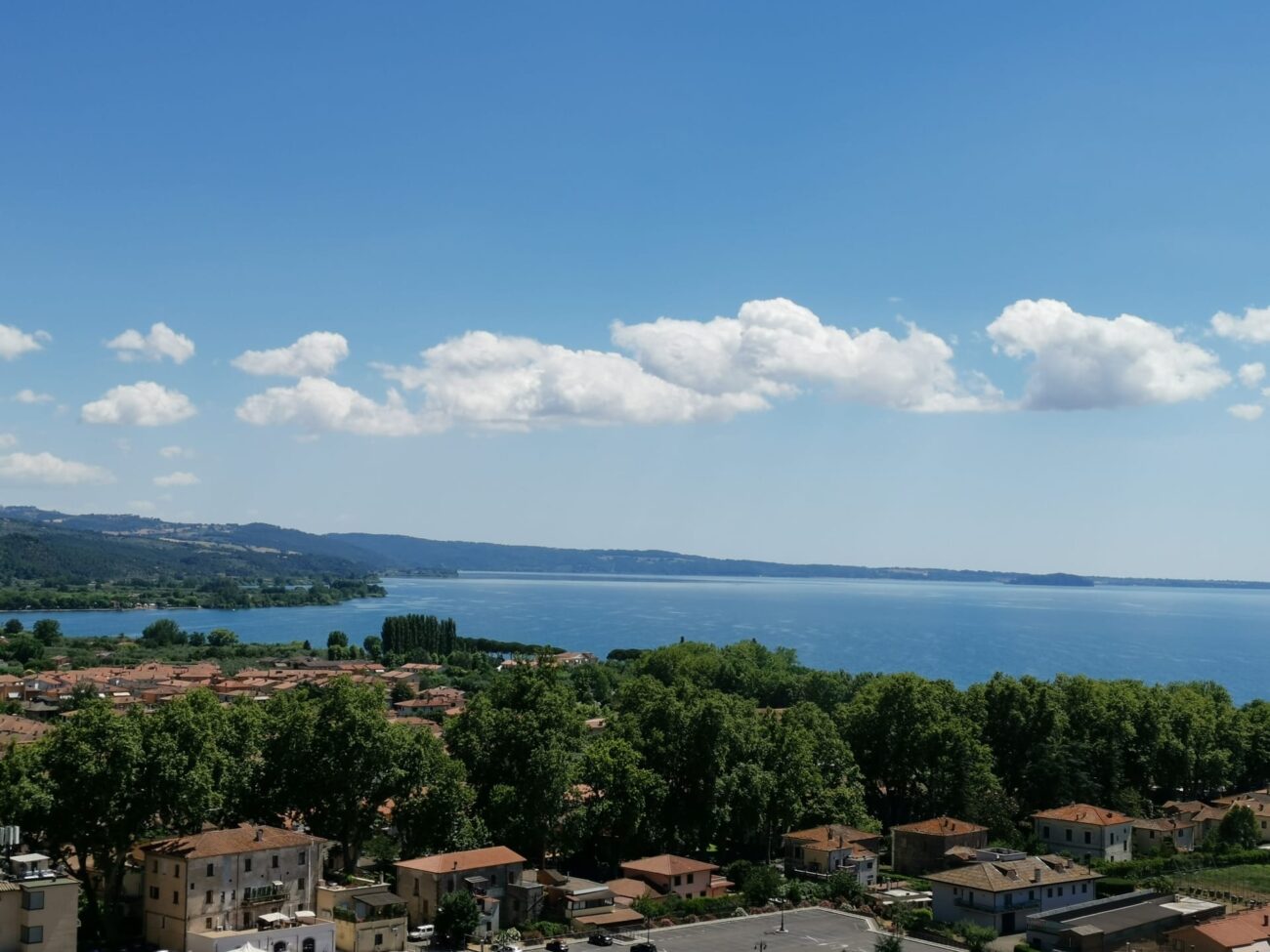
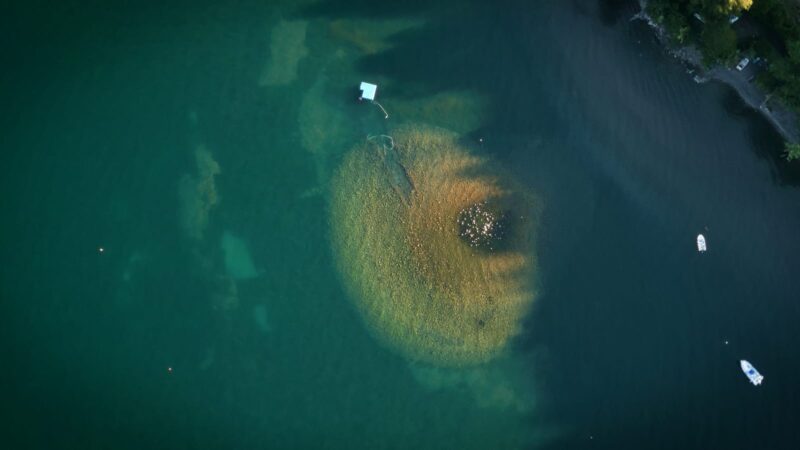
From the depths of Lake Bolsena comes a discovery that opens a new chapter in our understanding of the Gran Carro, one of the most important submerged archaeological sites in central Italy.
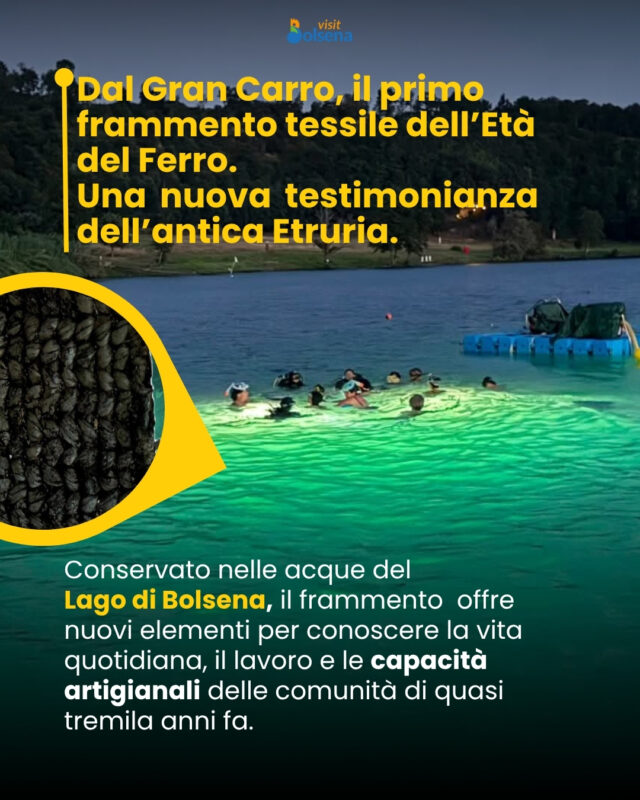
During the latest research campaigns, archaeologists recovered the first textile fragment ever identified at the site since investigations began more than sixty years ago.
Small in size but of considerable scientific value, the fragment makes it possible for the first time to directly observe something that until now had mainly been reconstructed through the tools used for spinning and weaving.
The find therefore provides tangible evidence of the technical knowledge, craft activities and everyday life of the communities that inhabited the shores of the lake almost three thousand years ago.
The first textile after more than sixty years of research
The history of archaeological investigations at the Gran Carro di Bolsena began in 1959, when the site was identified by Alessandro Fioravanti during underwater exploration of the lake.
Since then, archaeological research has revealed structures, pottery, wooden objects, artefacts connected with domestic activities and many other elements that have gradually helped reconstruct the character of the ancient settlement.
Until now, however, an actual textile fragment had never been recovered.
The discovery therefore represents a particularly important milestone in the long history of research at the site and adds new evidence to our understanding of the communities of the Early Iron Age that lived along the shores of Lake Bolsena.
Foto da Ministero della Cultura – Soprintendenza Archeologica Etruria Meridionale
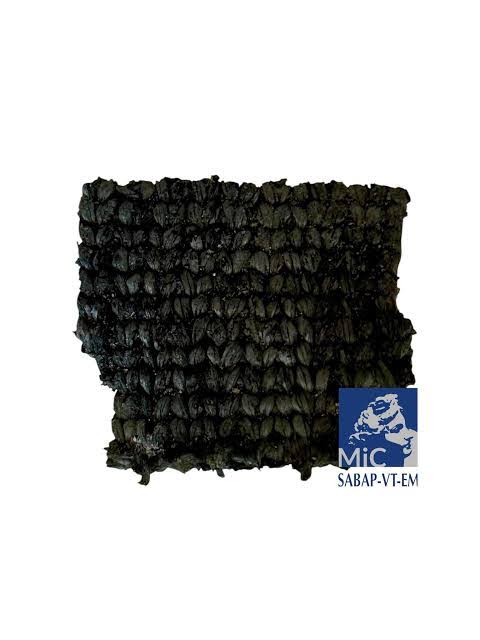
A textile preserved among the remains of an ancient structure
The survival of organic materials from such a remote period is extremely rare.
The fragment endured for almost three thousand years thanks to the particular conditions of the context in which it remained protected. It was recovered among charred materials and collapsed remains belonging to one of the structures of the settlement.
The submerged environment contributed to the preservation of a material that, under different conditions, would most likely have disappeared over the centuries.
The artefact will now undergo specialist analysis and conservation treatment at the Istituto Centrale per il Restauro – Central Institute for Restoration (ICR), allowing researchers to investigate its composition, manufacturing technique and state of preservation in greater depth.
Even preliminary observations, however, reveal a carefully worked weave, providing evidence of the high level of skill achieved in textile production.
What the Gran Carro textile fragment can tell us
The importance of the discovery lies not only in the rarity of the preserved material.
A textile provides direct access to an extremely tangible dimension of daily life: clothing, work carried out inside dwellings, the organisation of craft activities and knowledge passed down within the community.
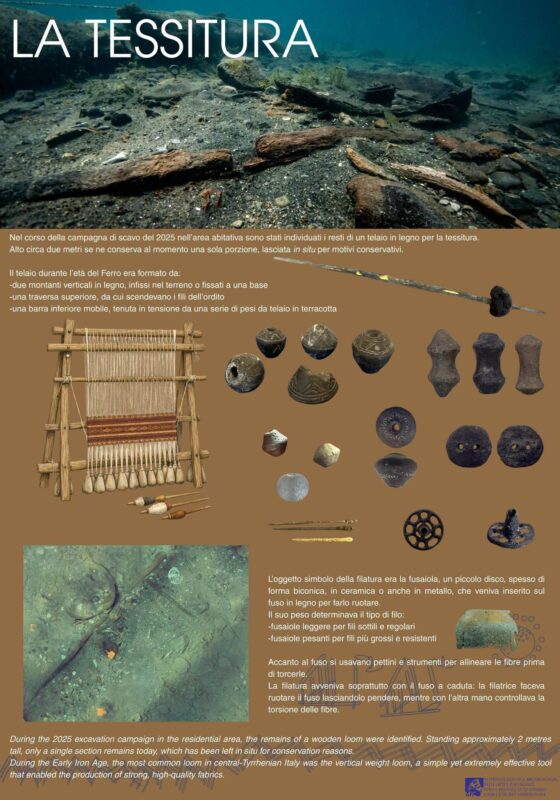
Until now, textile production at the Gran Carro had mainly been documented through tools and artefacts associated with spinning and weaving.
The recovery of the fragment now makes it possible to connect these objects with the actual result of that work.
For the first time, therefore, researchers have not only the tools but also part of a textile produced almost three thousand years ago.

Weaving inside the settlement’s huts
Recent archaeological campaigns have also provided new evidence about weaving inside domestic spaces.
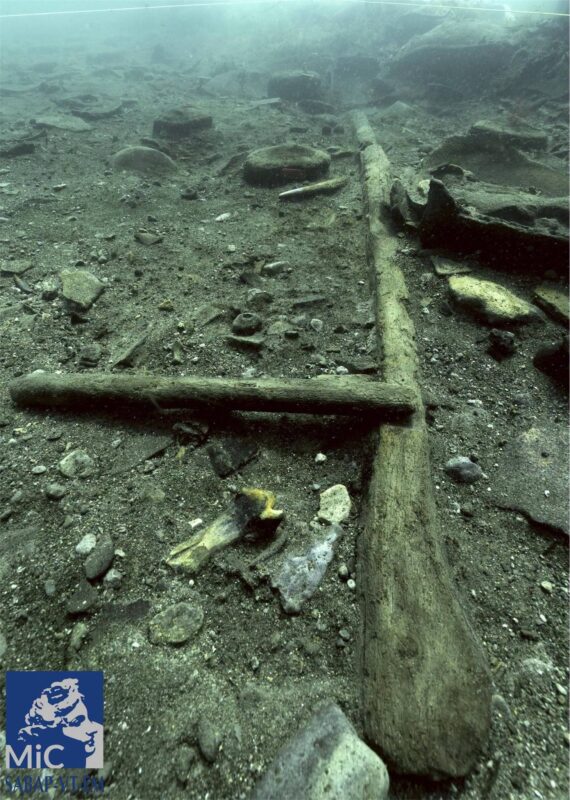
The investigations have made it possible to better understand the structure of a vertical domestic loom, already identified during research carried out in 2025.
The presence of the loom within the residential area suggests that textile production was integrated into everyday life and was carried out directly within domestic spaces.
The newly discovered textile fragment therefore strengthens a picture that has become increasingly clear in recent years: at the Gran Carro, textile production represented a well-established and organised part of community life.
Foto da Ministero della Cultura – Soprintendenza Archeologica Etruria Meridionale
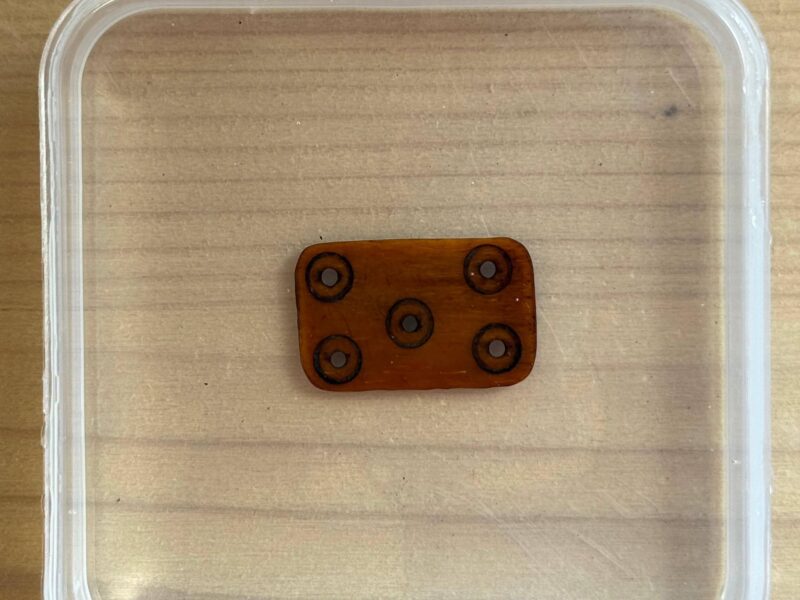
A bone tablet and a different weaving technique
Alongside the textile fragment, research has produced another particularly interesting artefact.
In Area 1 of the settlement, archaeologists recovered, for the first time at the Gran Carro, a small perforated bone tablet.
Objects of this type were used in so-called tablet weaving, a technique in which threads were passed through small holes in the tablet.
By rotating and combining the tablets, it was possible to create bands, ribbons and decorative borders, sometimes featuring complex patterns and used for both practical and ornamental purposes.
The discovery is especially significant because it documents the presence of different methods of working threads within the same settlement.
On the one hand, there was the large vertical loom used to produce textiles; on the other, a smaller tool suited to more specialised forms of weaving.
Foto da Soprintendenza Archeologica Etruria Meridionale
Increasingly complex craft skills
Taken together, the textile fragment, the vertical loom and the bone tablet reveal a far more complex picture than was previously known.
Weaving does not appear to have been an occasional activity, but rather a deeply rooted body of knowledge within the community, based on the use of different tools and specific techniques.
This is what makes the discovery particularly significant: it allows archaeologists to move beyond the objects themselves and begin to understand the gestures and activities of the people who lived in the settlement.
Preparing the threads, operating a loom and producing a band or piece of fabric required knowledge that had been learned, passed down and refined over time.
Foto Soprintendenza Archeologica Etruria Meridionale
Gran Carro: a story that continues to emerge from the lake
The first textile fragment is part of a series of discoveries that, in recent years, have significantly expanded our knowledge of the Gran Carro di Bolsena.
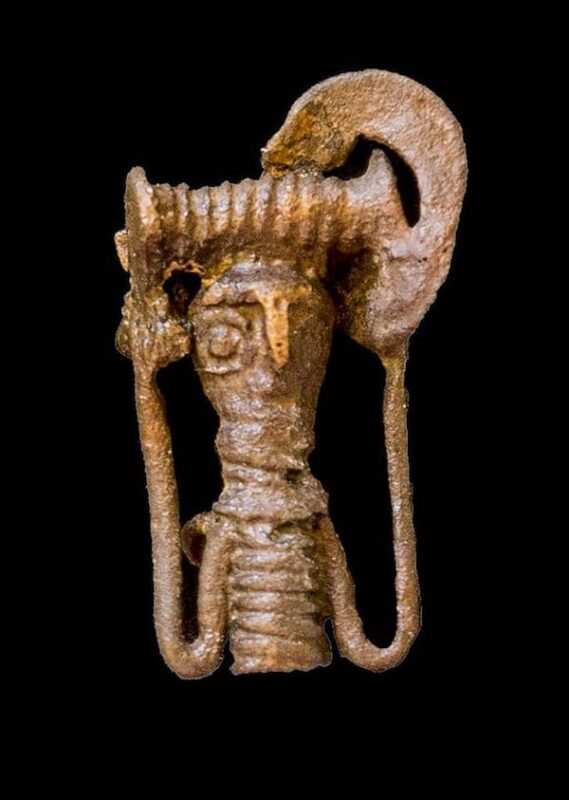
In 2021, investigations in the Aiola area, together with the discovery of a rare Villanovan bronze figurine, contributed to identifying the ritual and cult-related role of this part of the site.
Foto da Ministero della Cultura – Soprintendenza Archeologica Etruria Meridionale
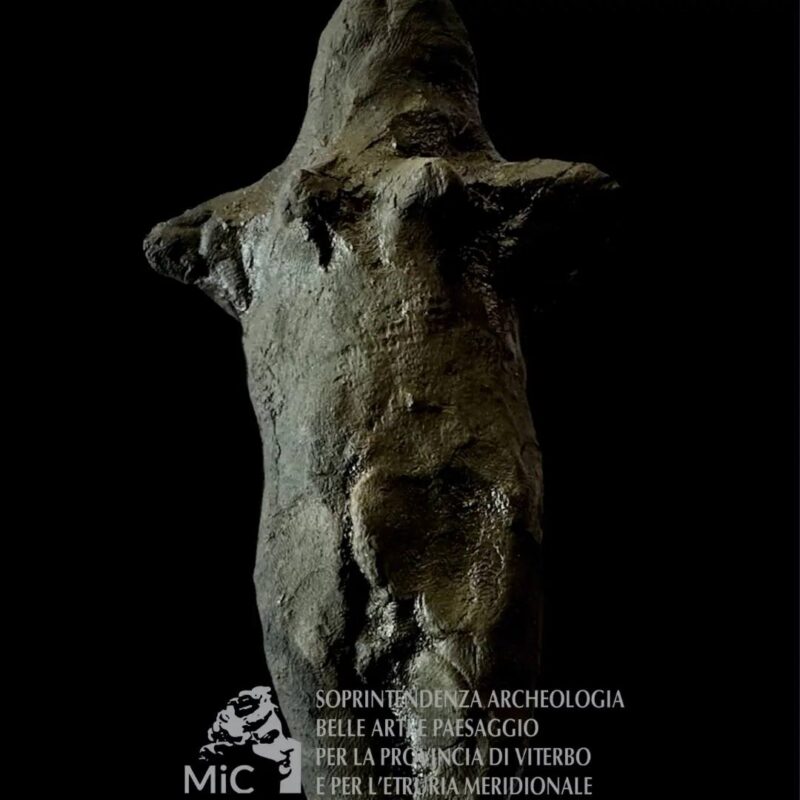
In 2024, a female terracotta figurine emerged from the settlement area. This small artefact still preserves traces of its manufacture and has provided new evidence concerning practices linked to the domestic sphere.
Foto da Ministero della Cultura – Soprintendenza Archeologica Etruria Meridionale
In 2026, the discovery of the first textile fragment added another fundamental piece to the picture, this time directly connected with work and craft production.
These are very different finds, but together they reveal increasingly tangible aspects of the community that lived along the shores of the lake during the Iron Age.
Un patrimonio conservato sotto le acque del Lago di Bolsena
A heritage preserved beneath the waters of Lake Bolsena
The Gran Carro demonstrates how Lake Bolsena is not only a natural and scenic heritage site, but also preserves beneath its surface an essential part of the earliest history of the territory.
The exceptional preservation conditions of the site allow archaeologists to recover extremely delicate materials and reconstruct aspects of life that rarely survive in terrestrial archaeological contexts.
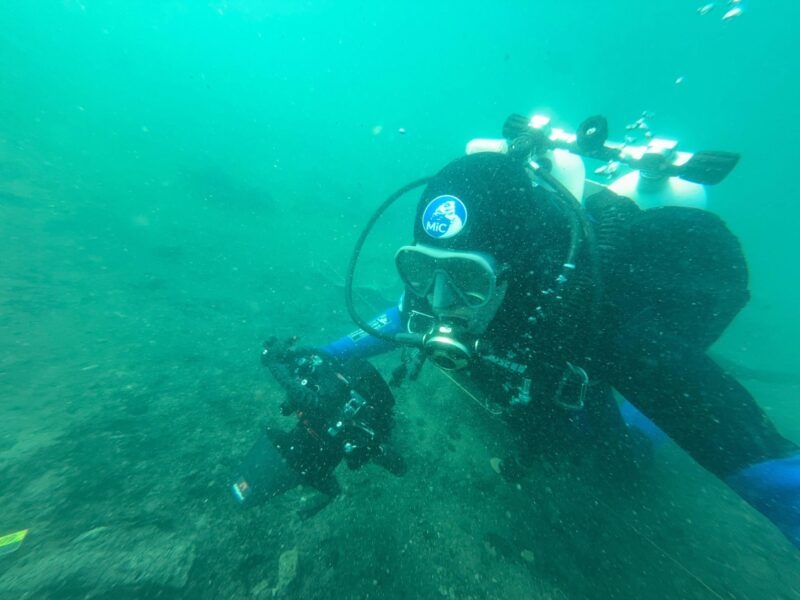
The textile fragment is perhaps one of the clearest examples.
After almost three thousand years, a few centimetres of fibre allow us to come closer to the work, knowledge and everyday life of the people who inhabited this same landscape long before the town we know today came into being.
It is through discoveries such as this that the Gran Carro di Bolsena continues, excavation after excavation, to reveal new chapters of its history.