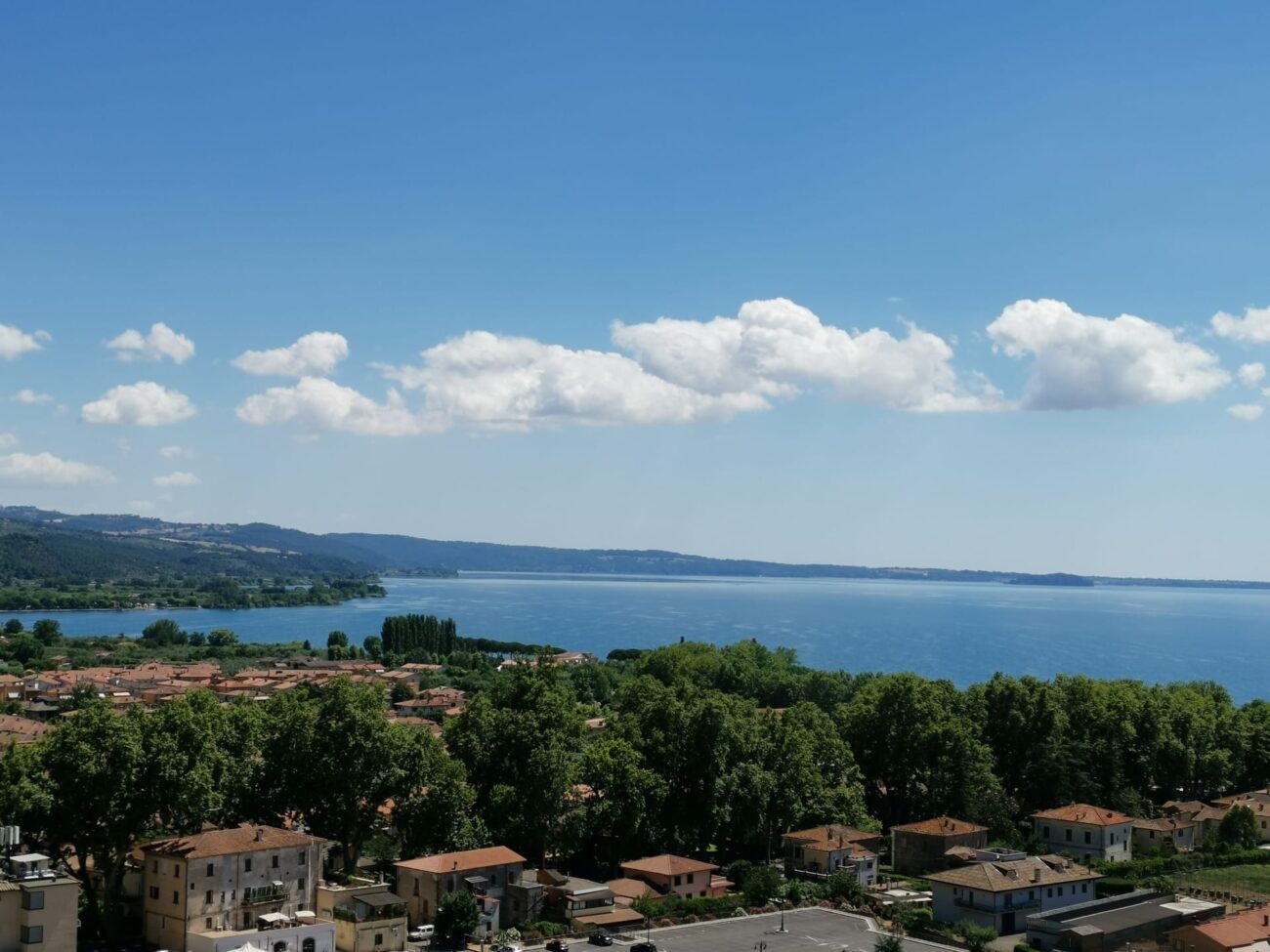
The waters of Lake Bolsena hold traces of civilisations that lived thousands of years ago. Today, part of this heritage has reached Paris, at UNESCO Headquarters, bringing the history of Bolsena to an international audience.
From 9 to 20 November 2026, artefacts from the Gran Carro underwater archaeological site in Lake Bolsena are on display in Stories from the Deep, an exhibition hosted in the Miró Hall at UNESCO Headquarters.
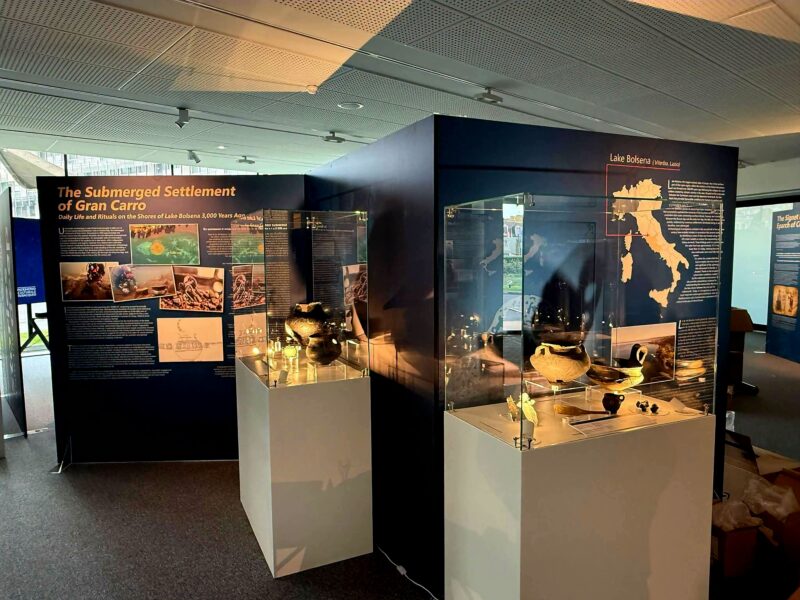
This international exhibition offers an important opportunity to highlight the historical and archaeological significance of our region through discoveries that reveal how communities lived along the shores of the lake almost three thousand years ago.
“Stories from the Deep”: Underwater Heritage on Display in Paris
The exhibition is part of the celebrations marking the 25th anniversary of the 2001 UNESCO Convention on the Protection of the Underwater Cultural Heritage.
Organised in collaboration with the Italian Ministry of Culture, the Permanent Delegation of Italy to UNESCO and the Carabinieri Command for the Protection of Cultural Heritage, the exhibition brings together archaeological evidence from various underwater sites.
Its main themes include archaeological research, conservation, the fight against illicit trafficking in cultural property and the importance of international cooperation in safeguarding this heritage.
Among the sites represented is the Gran Carro of Bolsena, one of the most significant examples of underwater archaeology in central Italy.
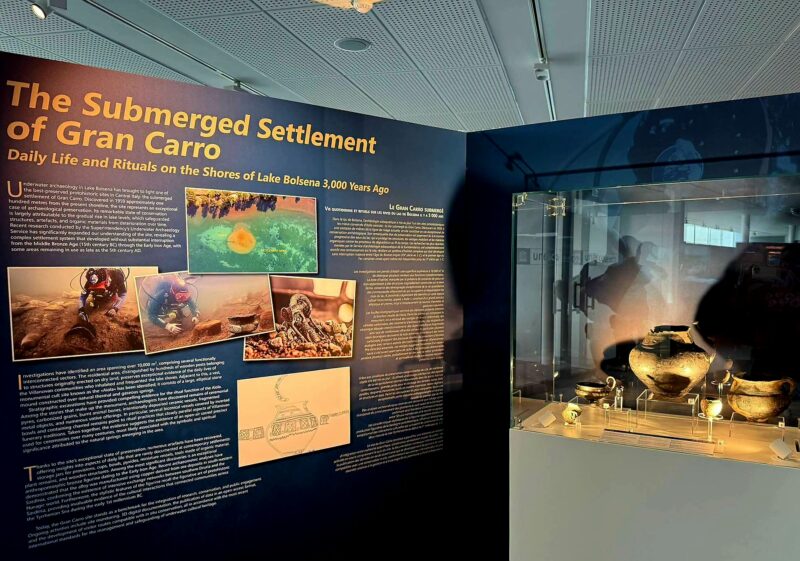
The Gran Carro: Three Thousand Years of History Beneath the Lake
Discovered in 1959, the Gran Carro of Bolsena is a prehistoric settlement whose origins date back to the Bronze Age, with its main period of occupation belonging to the Early Iron Age.
Archaeological investigations have identified two distinct areas: a residential settlement, containing the remains of wooden structures and numerous everyday objects, and an area associated with ritual practices, centred around the monumental complex known as the Aiola.
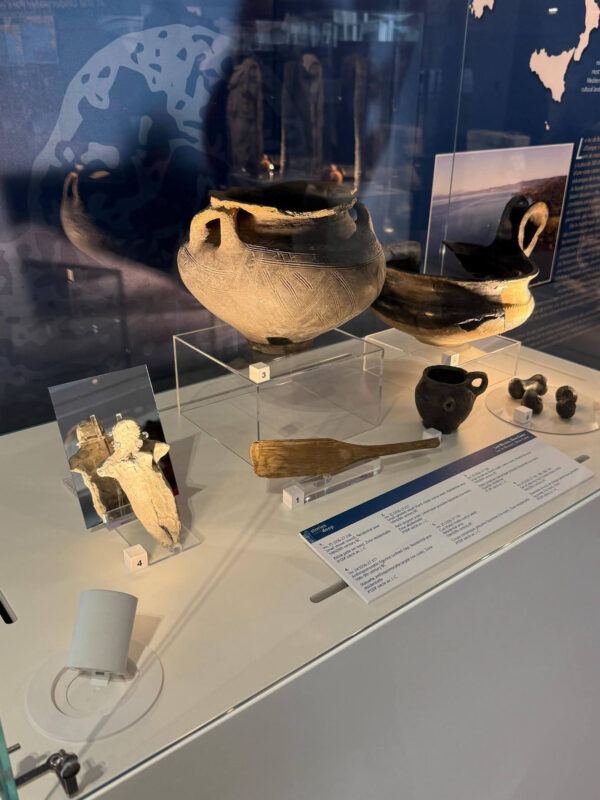
Research has helped reconstruct the daily lives of these ancient communities, their building techniques, craft activities and relationship with the natural resources of the surrounding landscape.
The preservation of organic materials, bronze objects and pottery makes the site an invaluable source of information about life almost three thousand years ago.
From Archaeological Research to Public Access: A Heritage to Discover
The presence of the Gran Carro in Paris comes at a particularly important time for the study and promotion of the site.
In 2026, archaeological campaigns coordinated by the Underwater Archaeology Service of the Archaeology, Fine Arts and Landscape Superintendency for the Province of Viterbo and Southern Etruria provided new information about the ancient settlement and the sacred area of the Aiola.
Among the most remarkable discoveries is a rare fragment of fabric dating to the Villanovan period, offering valuable evidence of the craft activities carried out by the settlement’s inhabitants
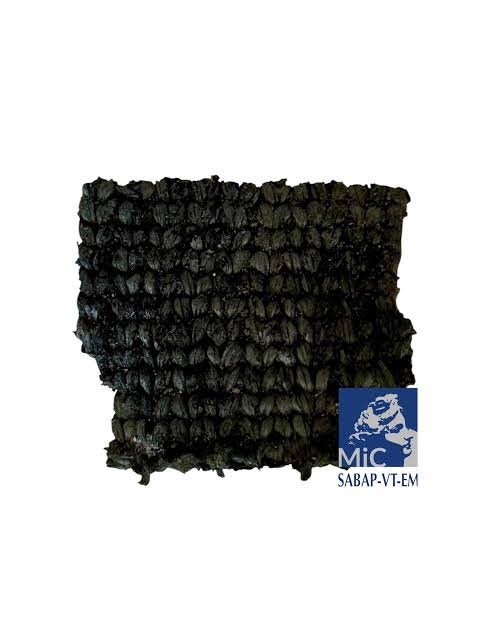
At the same time, conservation and enhancement projects have contributed to the development of an underwater archaeological park, with routes and resources designed to make the site’s history accessible to a wider audience.
This project brings together scientific research, heritage conservation and new opportunities for visitors to discover the archaeological treasures of Lake Bolsena.
From Bolsena to the World: A Story That Continues
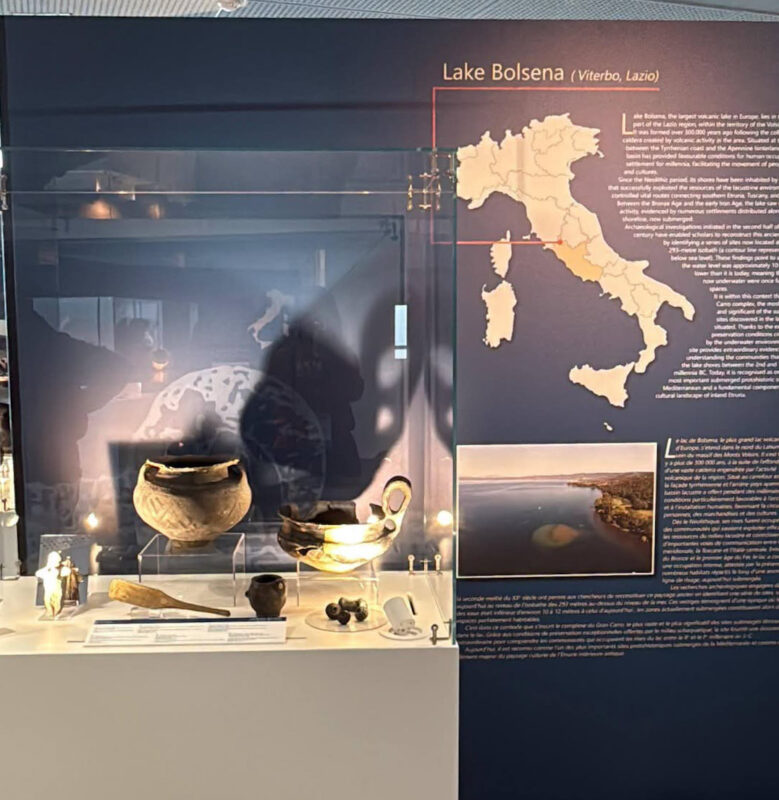
The participation of the Gran Carro in Stories from the Deep represents an important moment of international recognition for the archaeological site and the wider Bolsena area. It also highlights the essential work of research, protection and conservation needed to preserve the traces of the past and make them accessible to future generations.
Lake Bolsena is renowned for the beauty of its landscape, but its treasures extend far beyond the surface.
Beneath its waters lies a history that has yet to be fully uncovered. Thanks to the work of archaeologists, new chapters of this story continue to emerge, and today some of them have found their way to UNESCO Headquarters in Paris.
To discover more about this remarkable heritage, explore the Gran Carro Underwater Archaeological Trail.
Photo Gallery – The Stories from the Deep exhibition at UNESCO Headquarters in Paris, featuring archaeological artefacts from the submerged Gran Carro site in Lake Bolsena.
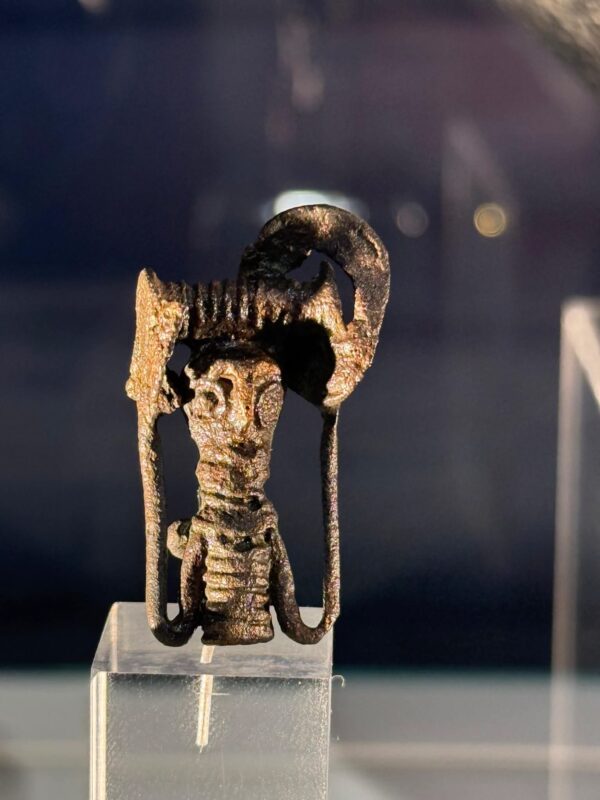
Among the exhibits is a rare anthropomorphic bronze figurine dating to the Villanovan period, discovered in the Aiola area and known by the curious nickname “Bigodino”, humorously given to it because of the distinctive shape of its grooved conical headdress.
Image source: Official page of the Archaeology, Fine Arts and Landscape Superintendency for the Province of Viterbo and Southern Etruria (Soprintendenza Archeologia, Belle Arti e Paesaggio per la provincia di Viterbo e per l’Etruria meridionale).