For over a thousand years, Bolsena has been a stop along the Via Francigena.
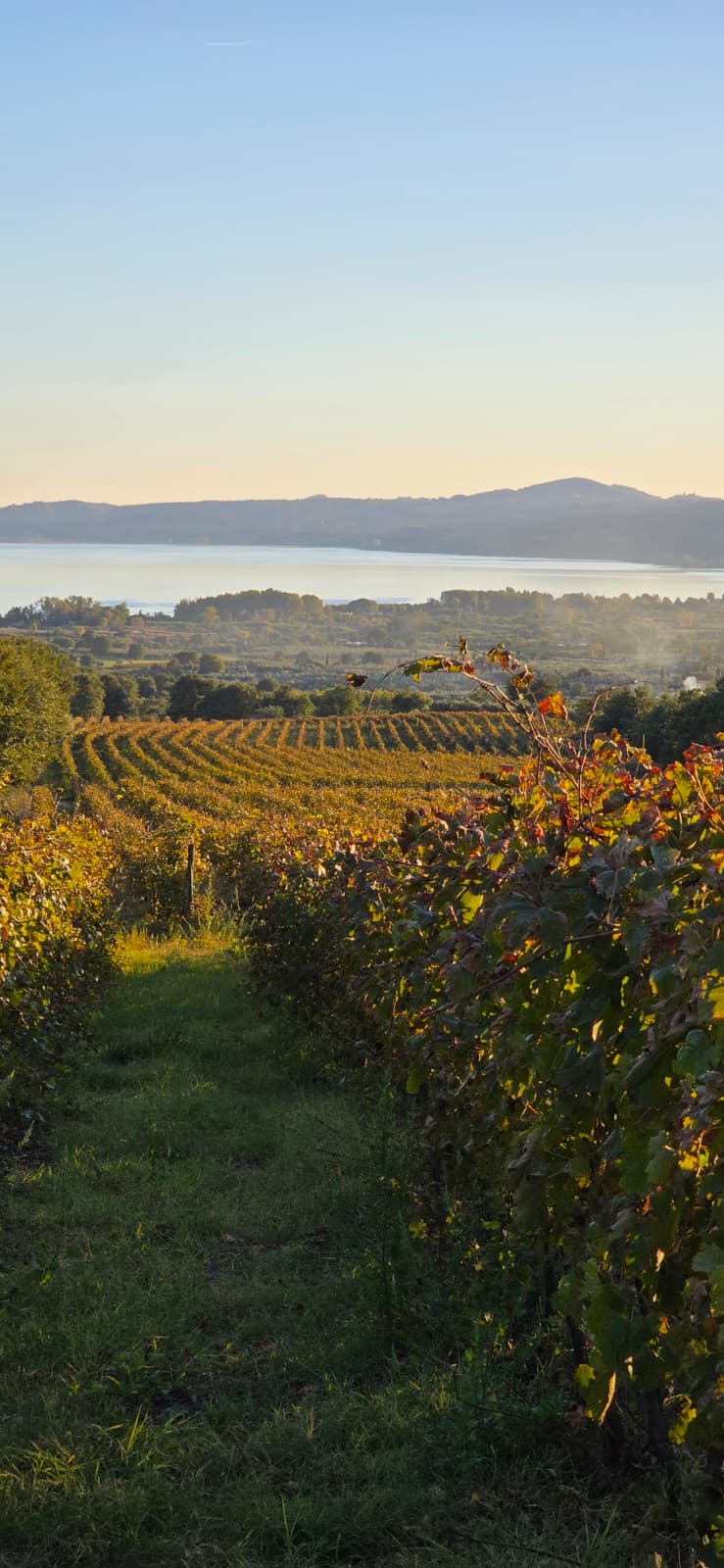
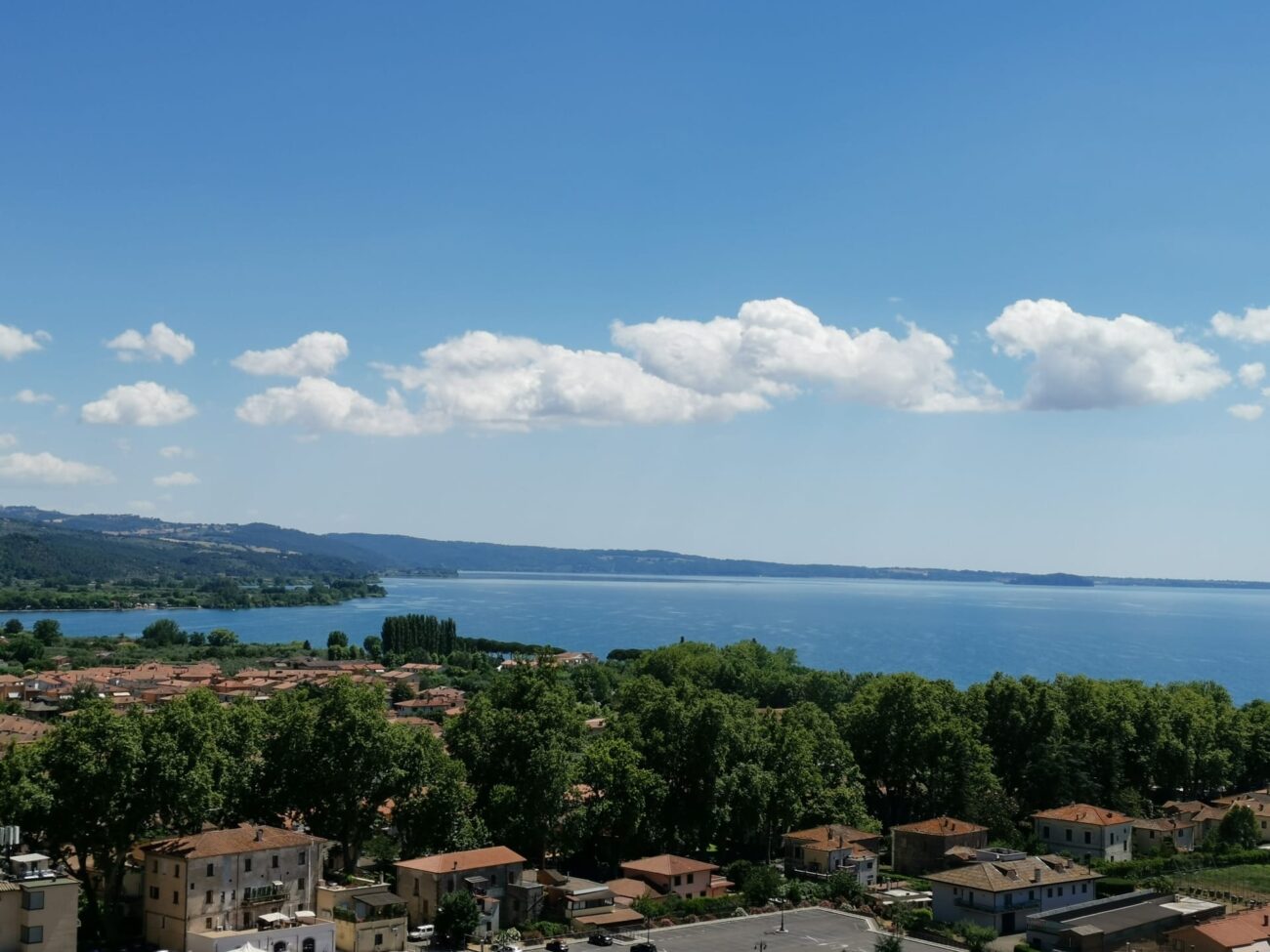
Even today, leaving the town in the direction of Montefiascone, the route passes through an ever-changing landscape, while maintaining a constant connection with the Lake Bolsena basin. Along the more open stretches, the view returns to the water and, at certain points, to the silhouettes of the Bisentina and Martana Islands.
Then the landscape narrows, greenery takes over, and the trail enters one of the most fascinating natural areas in the region: the Turona Archaeological and Natural Park. Here, even the way you experience your surroundings begins to change.


The lake and its islands along the route
Leaving the town centre behind, the route passes through olive groves, farmland and stretches of vegetation, remaining closely connected to Lake Bolsena. From the more open viewpoints, a succession of panoramic views over the water unfolds, and along some sections, the two islands of Bisentina and Martana also come into view.
The landscape changes constantly: the lake appears between the hills, disappears behind the vegetation, and then opens up before your eyes once again. The route then becomes more secluded, as the blue of the lake meets the green of the Turona Archaeological and Natural Park.
From panoramic views to the sound of water
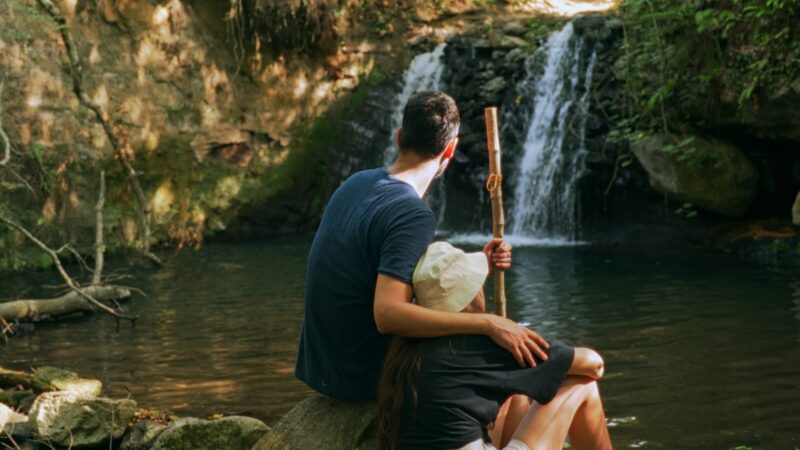
At Turona, it is no longer just the view that guides you, but also the sound of water. The trail begins near the Chapel of Madonna di Turona and continues into the woodland, following the Fosso Arlena stream for part of the way.
Along the route, you will encounter small waterfalls, shaded views and gentle changes in elevation, before reaching the higher areas of the park.

A place to experience, not simply pass through
Turona is much more than just a stop along the Via Francigena. It can also be a destination for a walk surrounded by nature, a few hours spent exploring the trails, or simply a relaxing break outdoors. The park offers picnic and rest areas, where visitors can unwind for a while or stop for refreshments before continuing their journey.
Along the route, several information panels provide useful insights into what visitors encounter during their walk, illustrating the park’s archaeological and natural features, as well as its close relationship with water.


Towards Bucine
Continuing along the network of trails and waterways, the route reaches the Bucine area, where the landscape becomes even more secluded.
A small bridge allows visitors to cross the stream, while the water forms pools that reflect the trees and the light filtering through the vegetation.
Pause for just a few minutes and you will notice how much movement exists even in a seemingly still scene: tiny organisms in the water, shifting reflections and leaves carried by the current.
It is almost like a natural painting.


The Bucine Mill
The Bucine Mill is one of the historical traces of how water was once harnessed in this area. Located near the springs, the mill remained in operation until the 1960s. Today, what is most striking is the relationship between the small building and its surroundings.
Stone, water and vegetation now seem to belong to the same landscape.
Yet its presence reminds us that what we now see as a natural environment was, for many years, also a place of work.
Water was not merely something to admire or listen to. It was a source of energy, whose power was harnessed to turn the millstones and process the produce of the land.
The route itself also preserves a name linked to water. This area is marked along the trail as the Guado del Bucine, a crossing point on the Via Francigena between Bolsena and Montefiascone.
It is a simple name that reminds us that pilgrims, workers and local inhabitants once passed through this very place, just as we do today.

Just stop and listen
The Bucine Mill did not need to be transformed into a grand monument to become a place of interest.
Its value lies in its surroundings: in the small bridge over the stream and in the water flowing through the woodland.
In the pools reflecting the trees. In the greenery reaching almost to the water’s edge.
And in that special feeling you experience when, for a few minutes, there is truly nothing else to do but stop, observe and listen.


From the sweeping views of Lake Bolsena and its islands, within just a few kilometres the route leads into this small world of water and woodland.
Two completely different perspectives, yet both part of the same journey.
Another way to discover Bolsena, one step at a time.
Experience it for yourself.