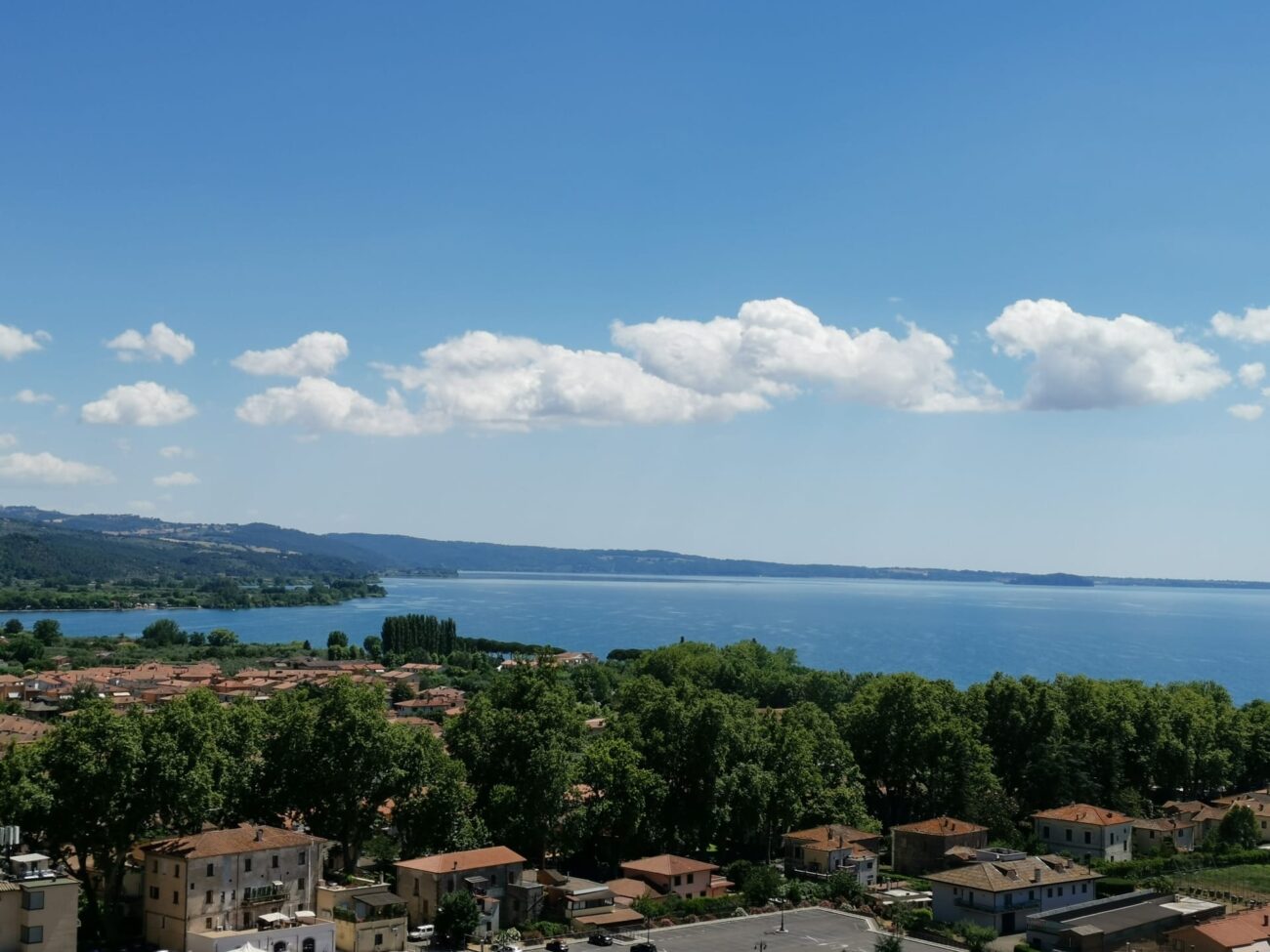
The flowers and wild plants that still bring color to the Corpus Domini Flower Carpets of Bolsena
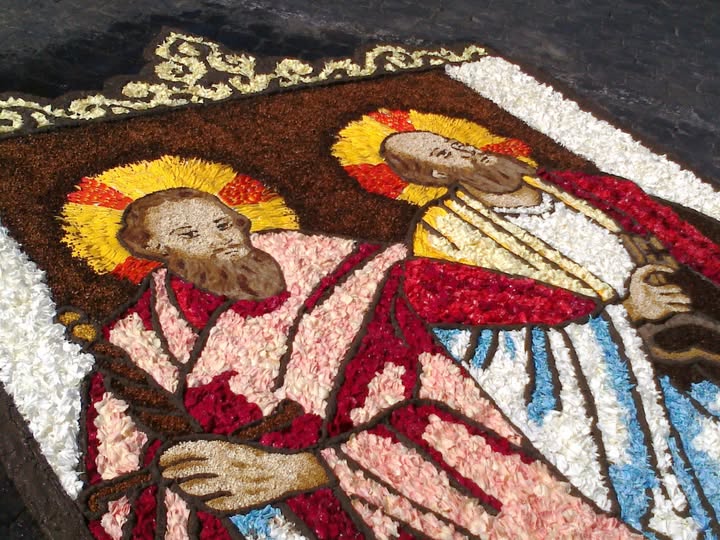
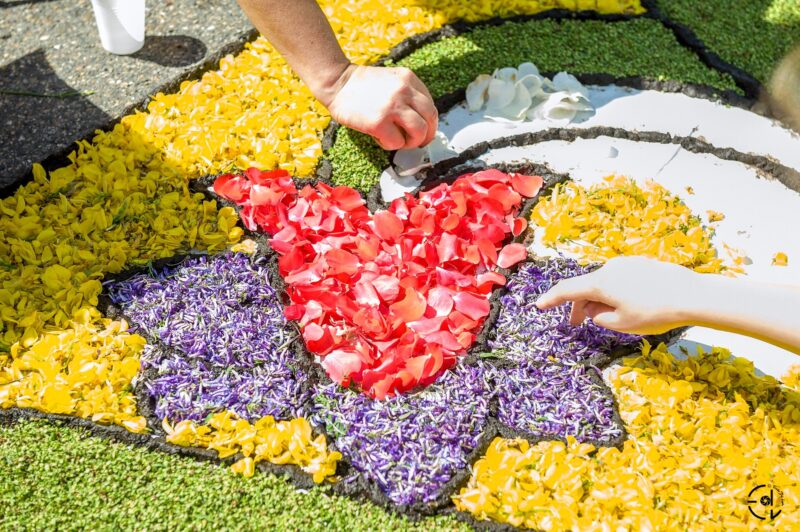
Every year, on the occasion of Corpus Domini, the streets of Bolsena are transformed into extraordinary floral carpets that combine art, faith, and tradition.
Behind the beauty of the Flower Carpets lies a process that begins long before the petals are laid: the search for and collection of flowers that will bring these works of art to life.
Before Petals Become Art…
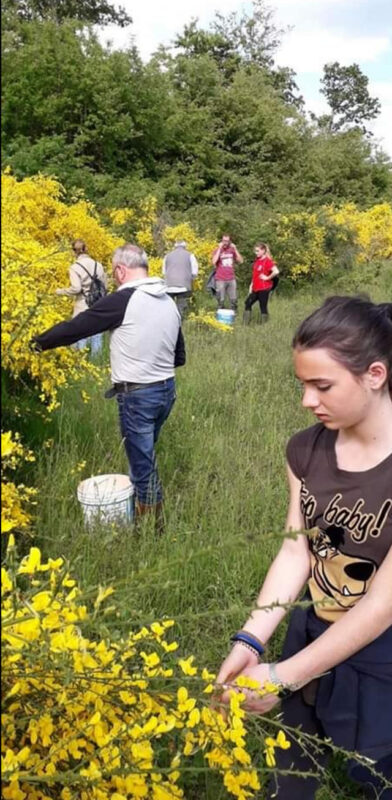
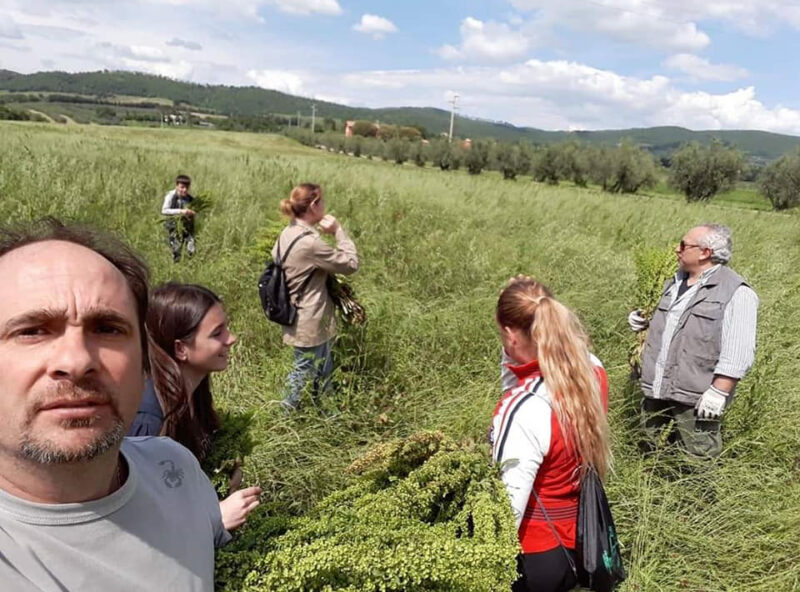
There are people who choose to dedicate their time to the collection of flowers used for the Flower Carpets.
It is an act of passion and devotion that preserves a deep connection with the land and with the colors that nature continues to offer.
A precious commitment that, year after year, helps keep alive one of Bolsena’s most beloved traditions. Every flower collected tells a story of love for the land, knowledge of nature, and a strong sense of community.
The Colors Nature Gives to the Flower Carpets
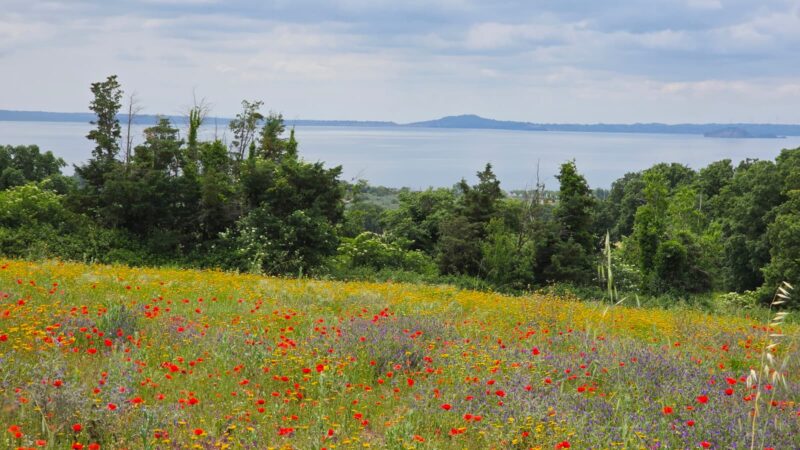
Even today, the countryside of Tuscia offers an extraordinary variety of wildflowers used in the creation of floral artworks.
Not all colors are obtained in the same way. Some require a long and patient collection process, involving hundreds of tiny flowers that, once separated and prepared, become part of the Flower Carpets.
Alongside flowers, wild herbs and natural plant materials are also used to create shades, contrasts, and details essential to the final design
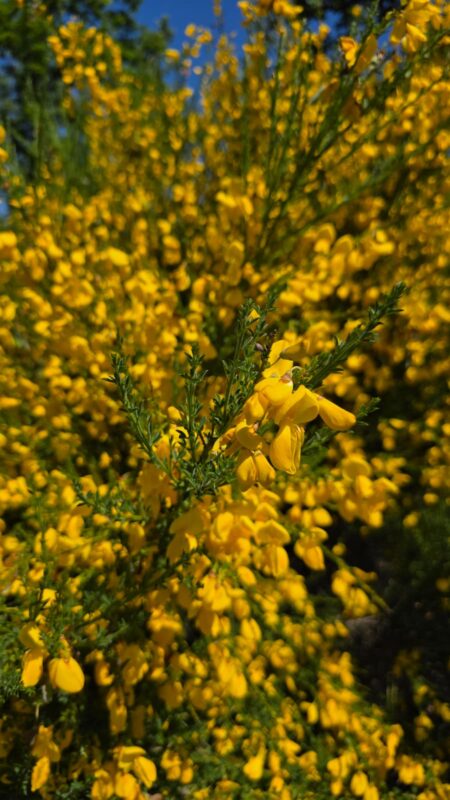
Broom: The Gold of the Flower Carpets
Among the most precious colors of the Flower Carpets is the intense yellow of broom.
Its petals are collected to create bright backgrounds and decorations that immediately catch the eye. During spring, the hills of Tuscia are covered in its blossoms, offering one of the season’s most recognizable sights.
Poppy: The Red of Spring
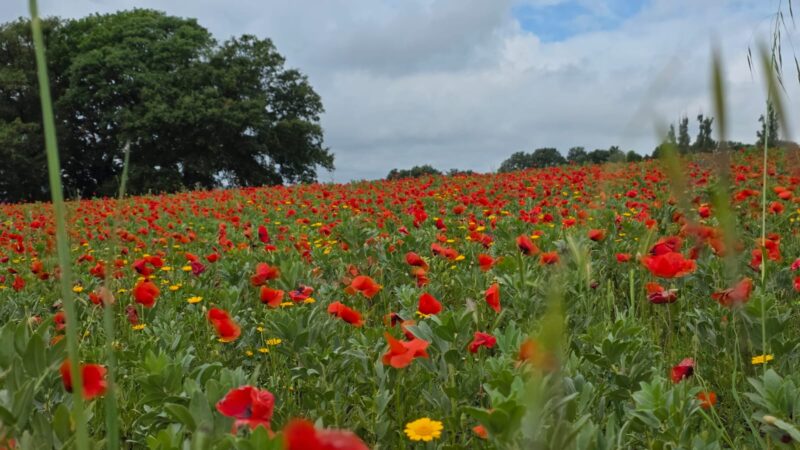
The poppy is one of the true symbols of spring fields.
Its petals are used to obtain the deep red color that characterizes many details of the floral compositions.
Because of their lightness and fragility, poppy petals require a careful and patient harvesting process to obtain significant quantities of color.
Behind every shade of red lie time, dedication, and passion.
Vetch: Shades of Purple
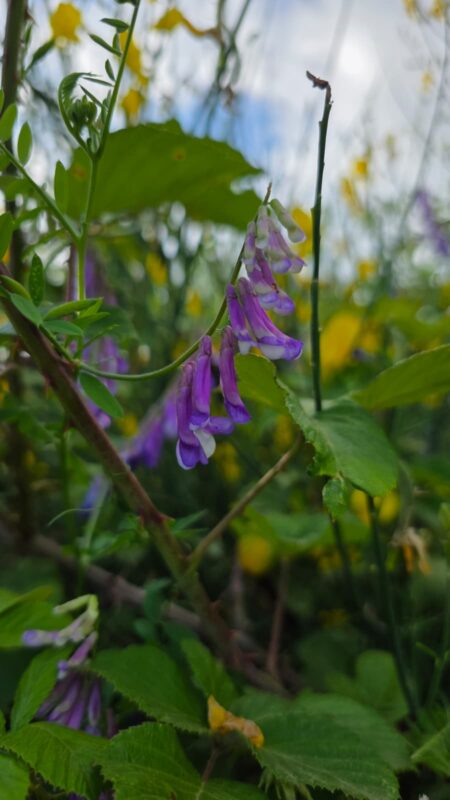
Among the most sought-after colors are the purple tones of vetch, a wild plant commonly found throughout the Tuscia countryside.
Its small flowers require a patient collection process in order to gather enough petals.
For this reason, vetch is often used to create details, contrasts, and subtle color transitions, adding elegance and depth to floral artworks.
Colors of the Sun
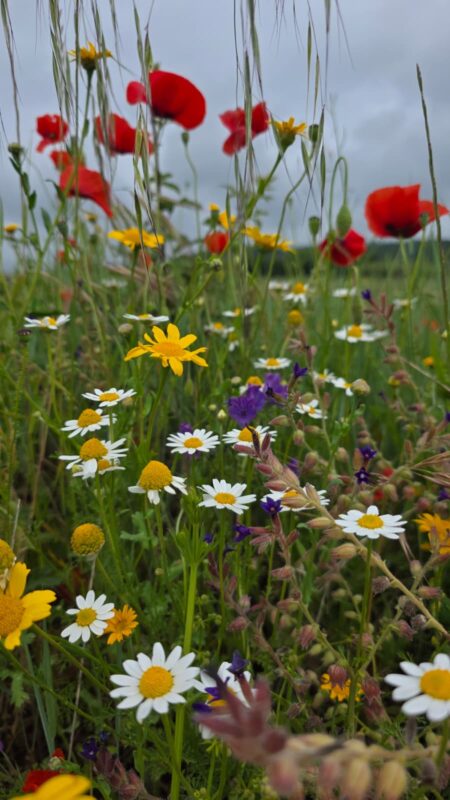
The fields and paths of Tuscia are home to many small wildflowers that enrich the natural palette of flower artists.
Among them, yellow daisies and other field flowers bring brightness and delicacy to the compositions. Though they are not usually used for large areas of color, they play a fundamental role in creating details, shades, and color transitions.
These small flowers, often gathered one by one, are a testament to the care and dedication behind every Flower Carpet.
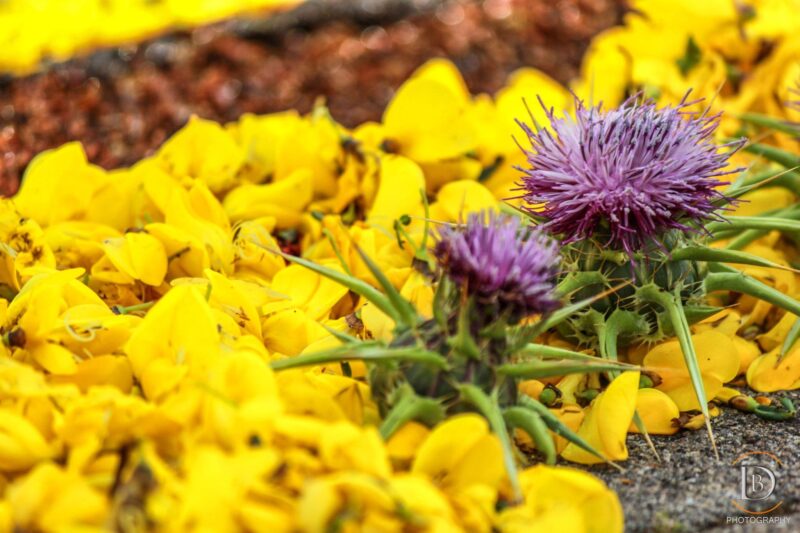
Thistle and the Flowers that Decorate the Guides
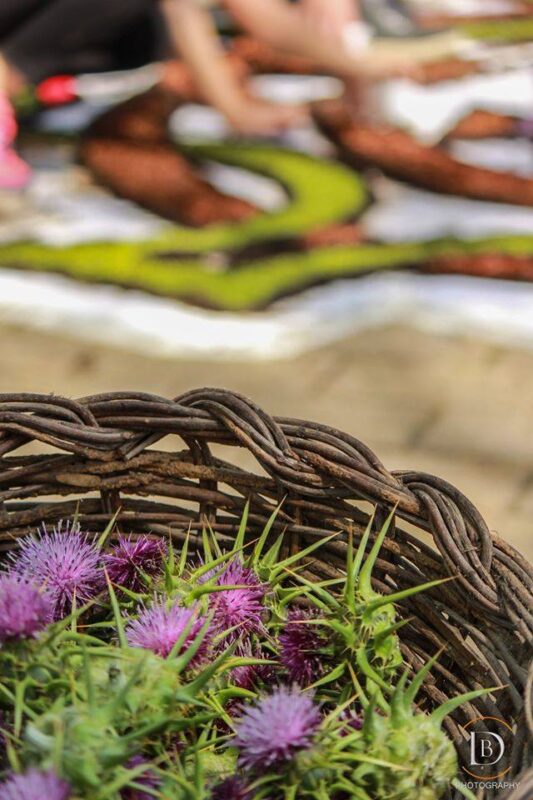
The thistle is a characteristic presence in the countryside of Tuscia.
In Flower Carpets, it is often used not for its petals but as a decorative element along the guides, the structures that define and frame the floral designs.
Alongside the thistle, the flower of the passionflower is also frequently used, appreciated for its elegant and decorative appearance.
Together, they enrich the ornamental structure of the artworks, showing how every element of nature can contribute to the final composition.
Elderflower: Light and Delicacy
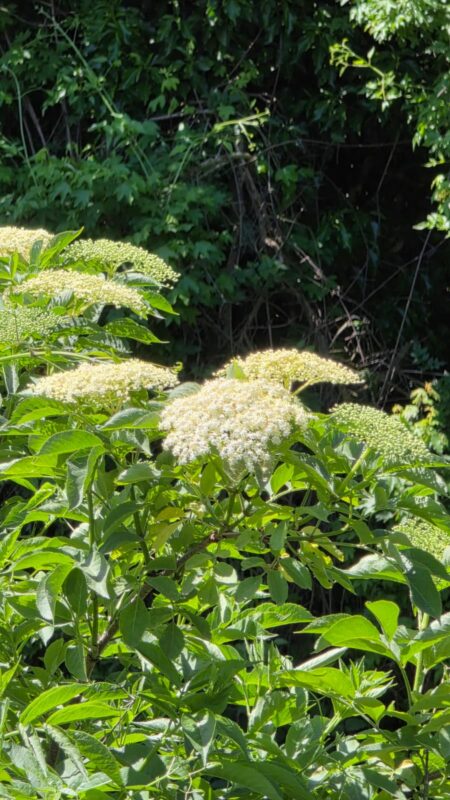
Among the most characteristic blooms of late spring is the elderflower, recognizable by its clusters of small white fragrant flowers.
Its blossoms are a valuable resource for creating points of light, soft shades, and delicate contrasts within floral artworks.
The lightness and natural elegance of elderflowers make them one of the most appreciated elements in the creation of floral carpets.
Acacia: The White of the Flower Carpets
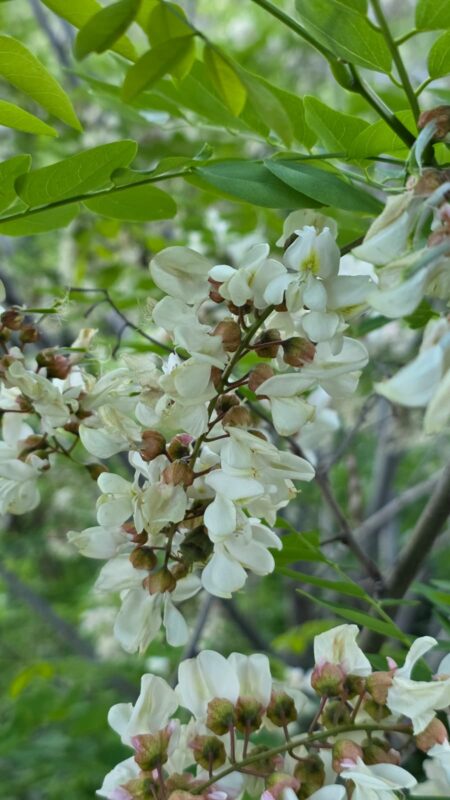
The delicate flowers of the acacia tree have long been a valuable resource in the creation of Flower Carpets.
Their pale tones help create bright areas, refined details, and color transitions that enhance the overall composition.
The blooming season of acacia coincides with the period of flower gathering, making it a familiar and cherished presence among flower artists.
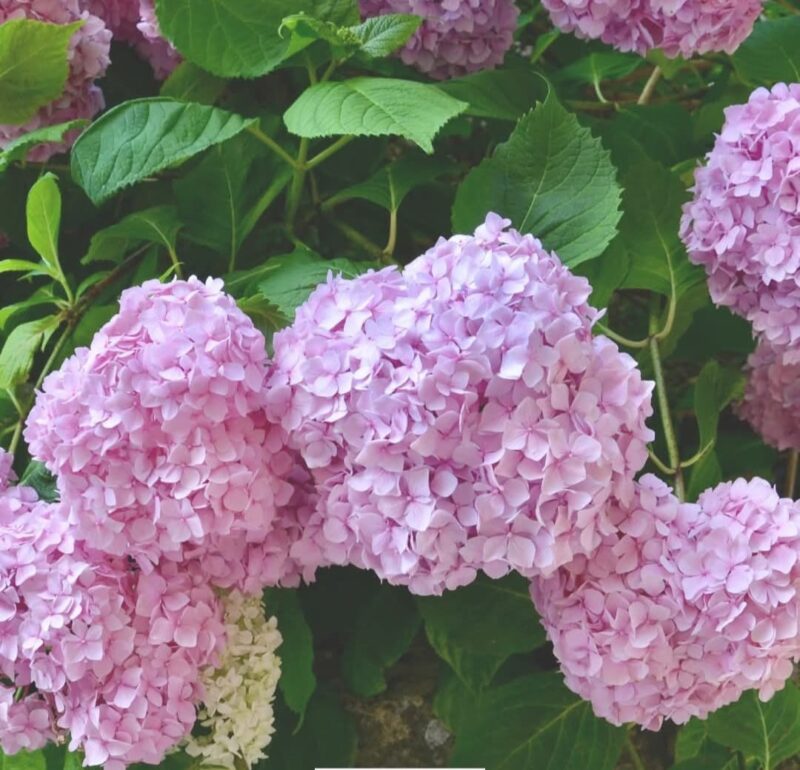
Hydrangeas: Elegance and Color
📸 Insert hydrangea photo
With their large flower clusters and remarkable variety of tones, hydrangeas are among the most valuable resources for floral artwork.
From white to pink, blue, and purple, they provide intense and uniform colors that allow artists to create large areas of color and sophisticated decorative effects.
Their abundant petals also provide large quantities of floral material, a feature particularly appreciated during preparation.
Roses: Timeless Protagonists
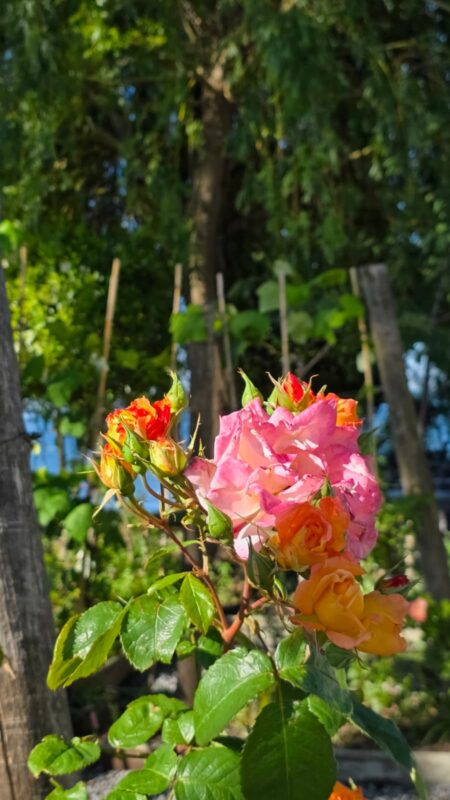
For their variety of colors, fragrance, and abundance of petals, roses remain among the most appreciated flowers used in Flower Carpets.
Their shades add depth, movement, and vibrancy to the artworks, enriching the floral palette with an almost endless range of colors.
Long regarded as symbols of beauty and devotion, roses continue to hold a special place in the Flower Carpet tradition of Bolsena.
Foglione: The Color That Comes from the Earth
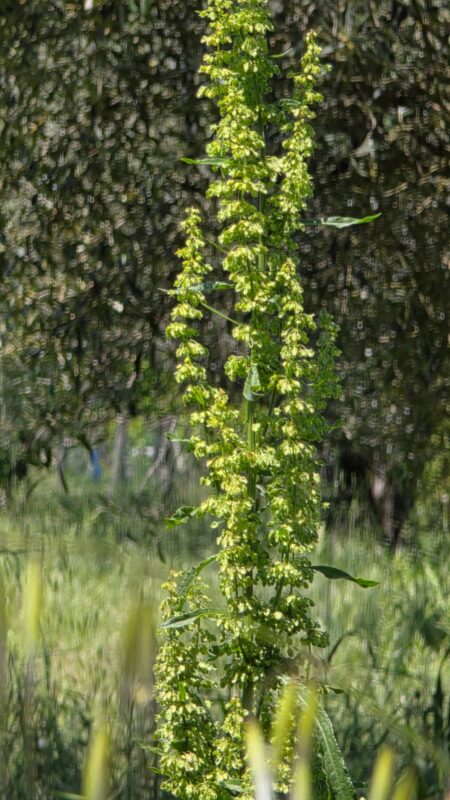
Known locally in the Bolsena dialect as foglione, this wild field plant is one of the most valuable natural materials used in the Flower Carpets.
Unlike flowers, its importance lies not in petals but in the shades it provides during different stages of maturation.
When harvested young, it offers an intense green color, ideal for backgrounds and decorative elements. As it matures, it develops an appreciated speckled effect, useful for creating natural shades and contrasts. When fully mature, it becomes a valuable natural brown, used for details, shadows, and outlines.
From a single plant, flower artists can obtain three different tones: green, speckled, and brown, making foglione one of the most versatile materials in the tradition of Bolsena’s Flower Carpets.
Mouse-tail Grass: Lightness and Movement
📸 Insert mouse-tail grass photo
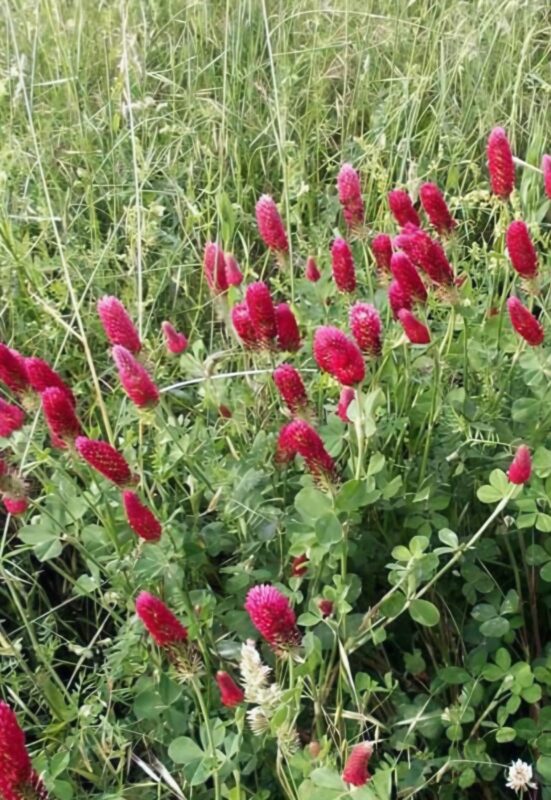
Among the wild plants used in the Flower Carpets is mouse-tail grass, a species commonly found throughout the Tuscia countryside.
Appreciated for its elegant and slender shape, it is mainly used as a decorative element to enhance floral compositions and highlight specific details.
Its presence brings movement, lightness, and natural harmony, demonstrating once again how even the simplest plants can become part of this centuries-old tradition.
Thanks to the Guardians of Tradition
Behind every Flower Carpet are people who dedicate their time, experience, and love for the land.
Thank you to those who choose to collect flowers and to those who continue to preserve the colors that nature offers, transforming them, petal by petal, into the magic of Bolsena’s Flower Carpets.
Because every floral artwork is not simply a work of art: it is the result of a community that continues to pass on one of its most beautiful traditions.
See You in Bolsena
The next opportunity to experience the magic of the Flower Carpets will be on June 7, when the streets of Bolsena’s historic center will once again be filled with colors, fragrances, and artworks created from thousands of petals.
A unique opportunity to discover a tradition that brings together faith, art, and love for the land.
We look forward to welcoming you to Bolsena and sharing the magic of Festa del Corpus Domini.