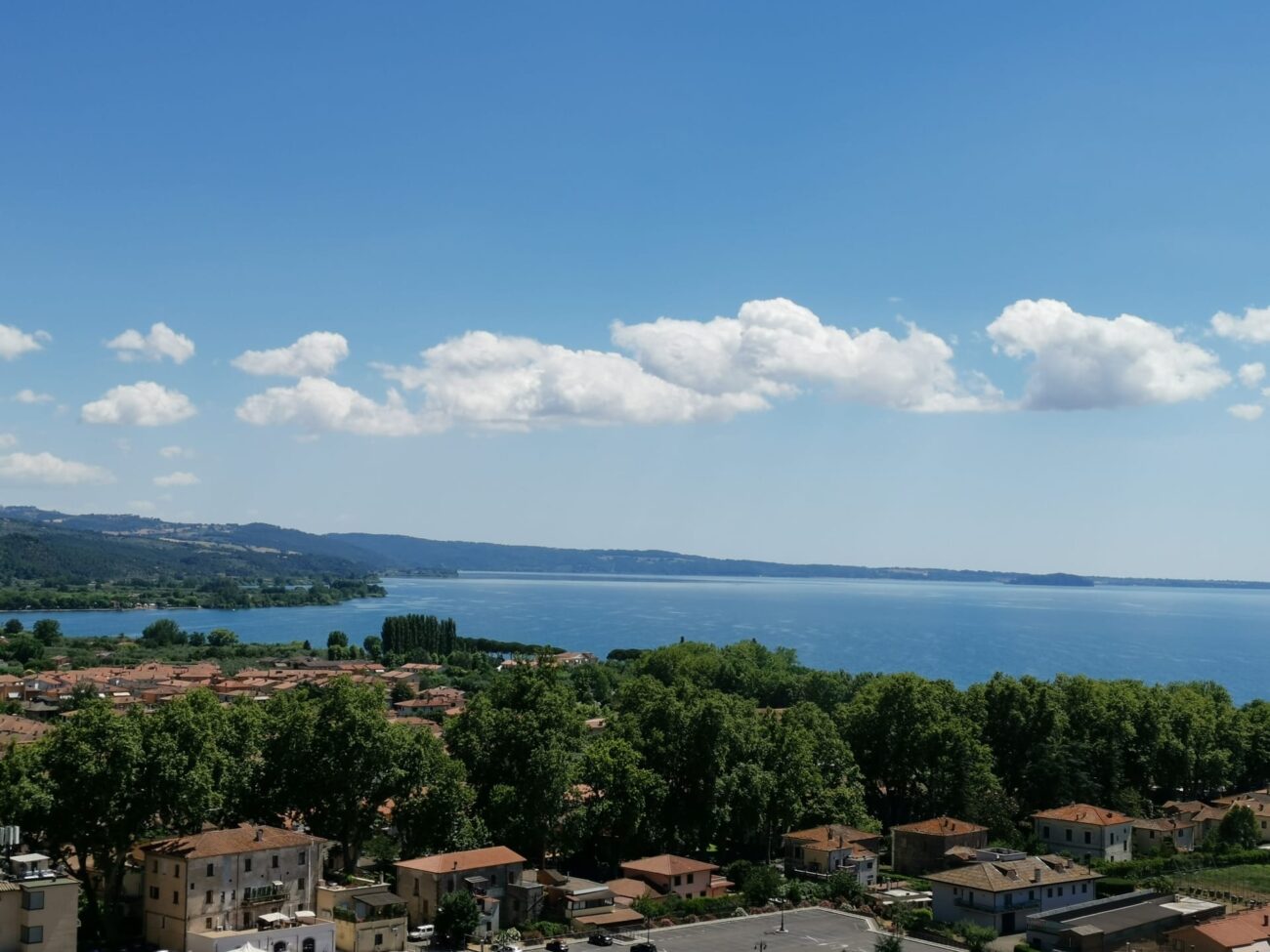
The Labrum of Bolsena: A Roman Basin on the Lakefront
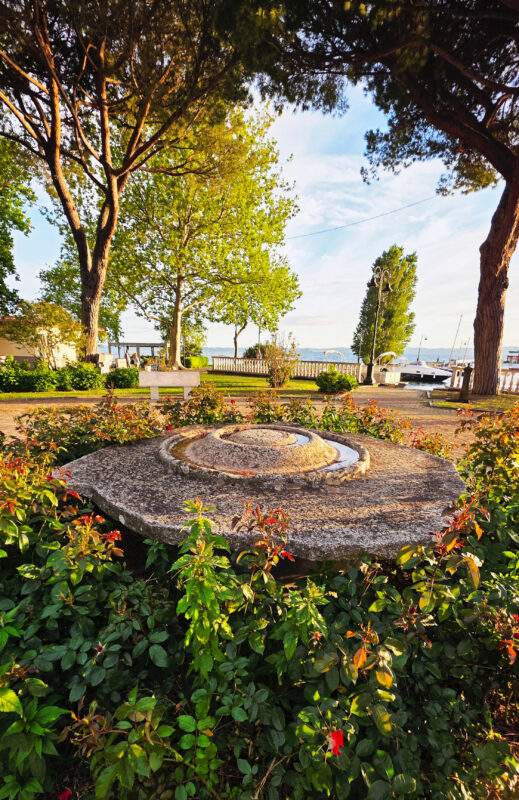
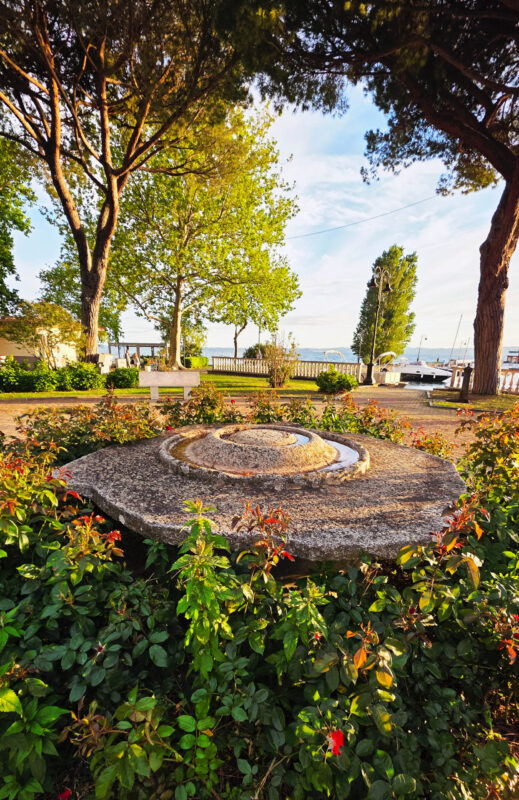
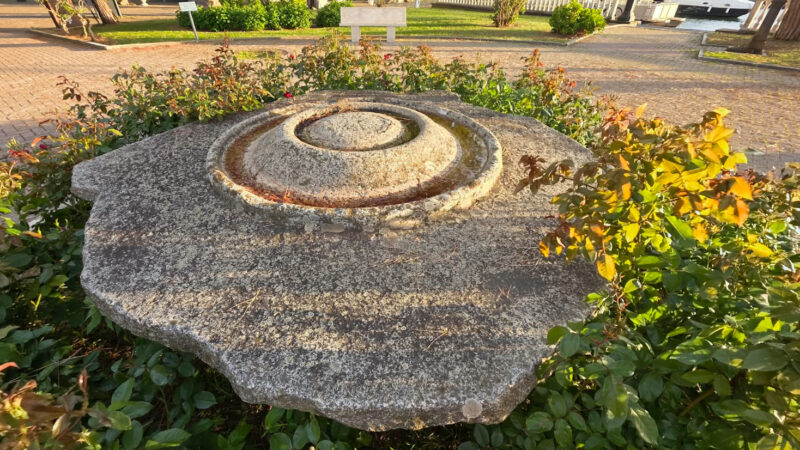
Walking along the Bolsena lakefront, it is easy to pass the labrum without stopping. Today, it looks like a large circular stone set among the plants, but it was originally a granite basin dating to the 1st century AD. Its documented history takes us through several locations in the town.
The labrum outside Santa Cristina
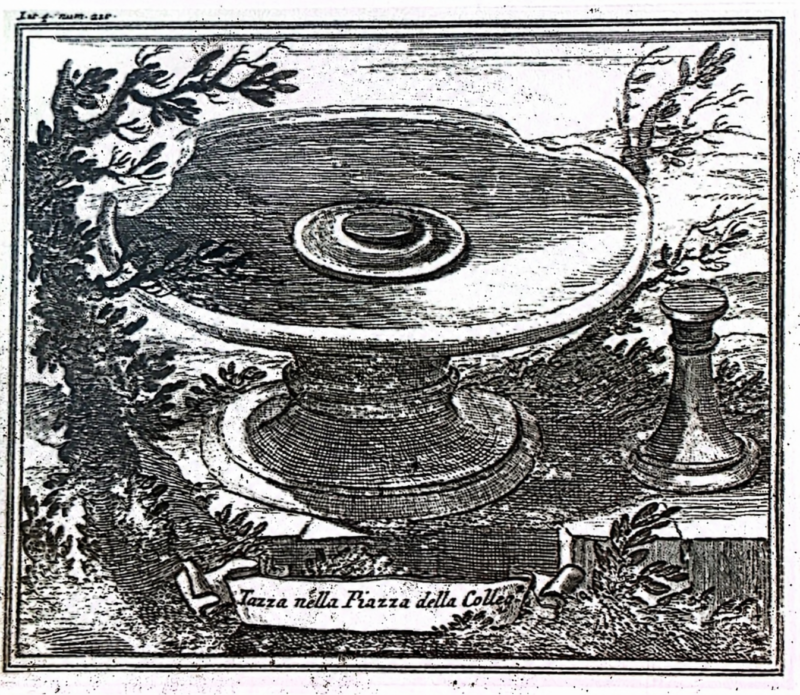
In his Storia di Volseno, the Bolsena-born abbot Andrea Adami records that, in the first half of the 18th century, the basin stood in the square outside the Basilica of Santa Cristina.
An illustration included in his work shows a detail that is missing today: the basin still had its rim, although it was already broken in several places. Comparing this historical image with the surviving artefact reveals how much its appearance has changed.
From basin to seat
The rim was later removed, and the basin was repurposed as a seat. For decades, it remained in the small garden behind the former town hall, a few metres from the Via Cassia, where the monument to the Eucharistic Miracle stands today.
In the spring of 2013, the labrum was moved to its current location on the lakefront to help preserve it and make it accessible to the public.
A large fragment of its rim had been discovered by chance on the roof of the Basilica of Santa Cristina the previous year. It is now preserved in the Lake Bolsena Territorial Museum.
Where did the labrum of Bolsena come from?
The circumstances of its original discovery are unknown. The basin is thought to have come from the area of Roman Volsinii.
Adami recorded an old tradition suggesting that it had been taken from a temple of Apollo, where it was said to have collected the blood of sacrificial animals. This is a historical tradition rather than an established origin. In Roman times, basins of this type were used in both bath complexes and sacred settings.
Today, the labrum can be seen during a walk beside the lake. Its shape may resemble a stone table, but a closer look reveals an ancient object whose changing locations and uses form part of the history of Bolsena.