Virna Lisi, Vittorio Gassman, Carlo Verdone, Ornella Muti, Sergio Castellitto and Alice Rohrwacher.
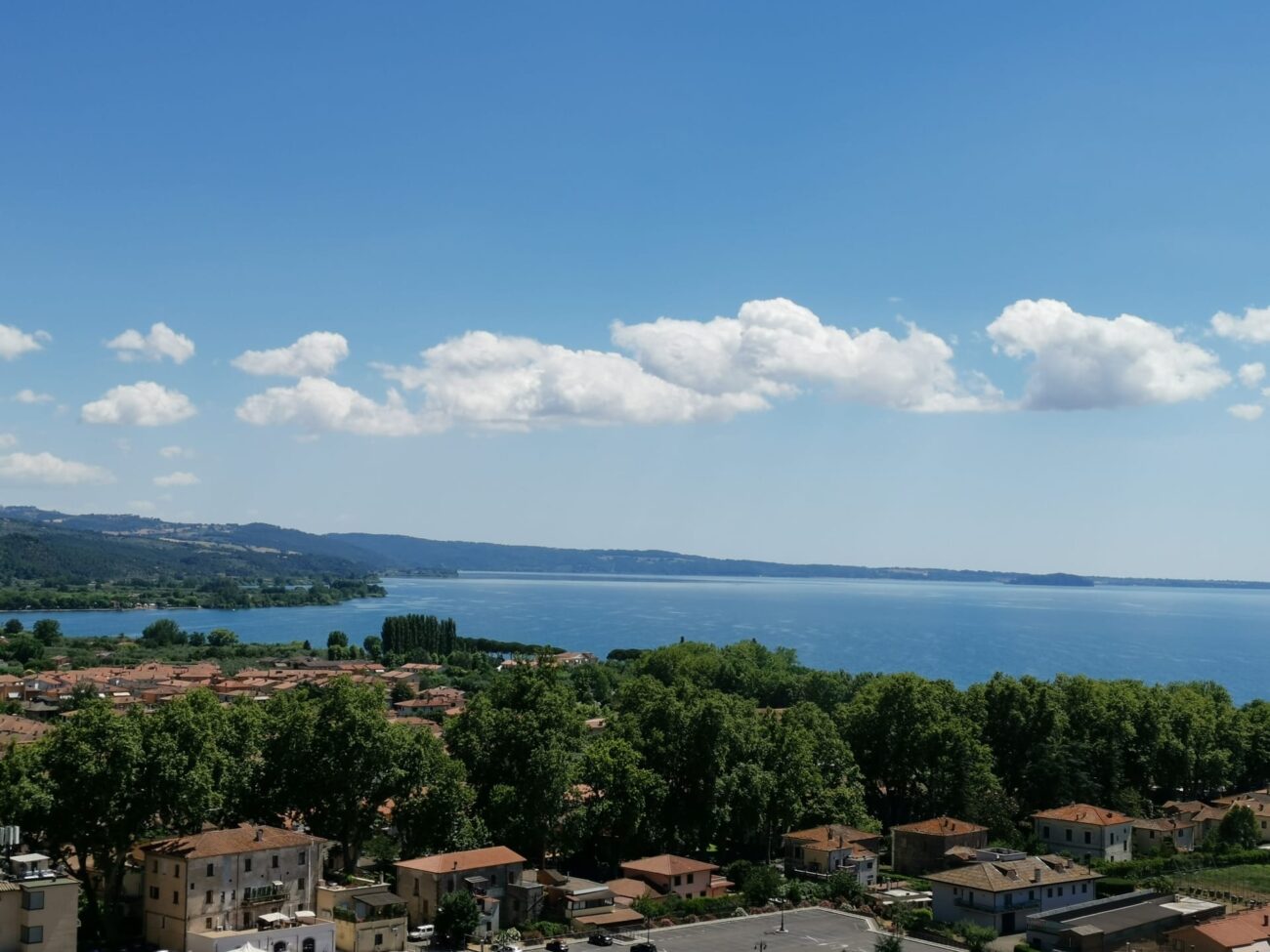
Lake Bolsena has crossed paths with the history of Italian cinema on several occasions, and its two islands, Bisentina and Martana, have also found their way in front of the camera.
Sometimes as actual filming locations, at other times simply lending their distinctive silhouettes to cinematic fiction.
And on one occasion, the small island of Martana even managed to transform itself into an island in Finland.
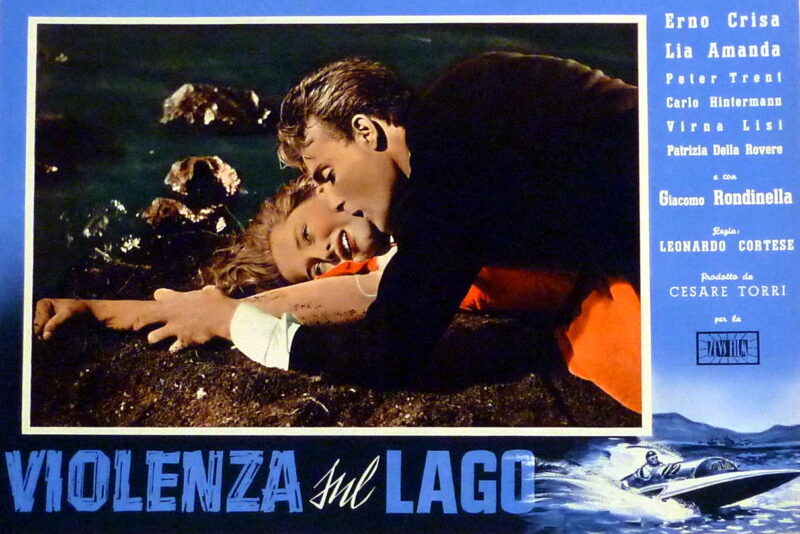
Virna Lisi and Violenza sul lago
The story begins in the 1950s.
In 1954, Violenza sul lago (Violence on the Lake) was released, directed by Leonardo Cortese and filmed partly in the Lake Bolsena area.
The cast included a very young Virna Lisi, at the beginning of a career that would later take her to international cinema.
The title itself already gives the lake a special role: not simply a backdrop, but a place deeply connected to the story.
It was one of the first chapters in a long relationship between these waters and the big screen.
Brancaleone and Bisentina Island
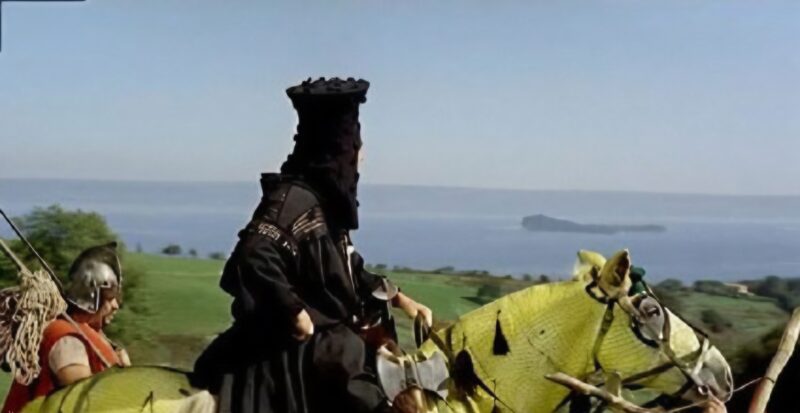
In 1966, one of the great classics of Italian comedy arrived on the big screen: L’armata Brancaleone (For Love and Gold), directed by Mario Monicelli and starring Vittorio Gassman.
Brancaleone and his unlikely band of followers are heading towards the fiefdom of Aurocastro, which in the story is supposed to be located in Puglia.
But cinema, as we know, can reshape geography. When Aurocastro is shown from a distance, what actually appears on screen is Capodimonte, on Lake Bolsena. And Bisentina Island can also be recognised in the landscape.
For a few moments, then, the lake and its island become part of a completely cinematic Middle Ages.
Carlo Verdone on Bisentina Island
But it was in 1990 that Bisentina gained one of its most curious chapters in film history.
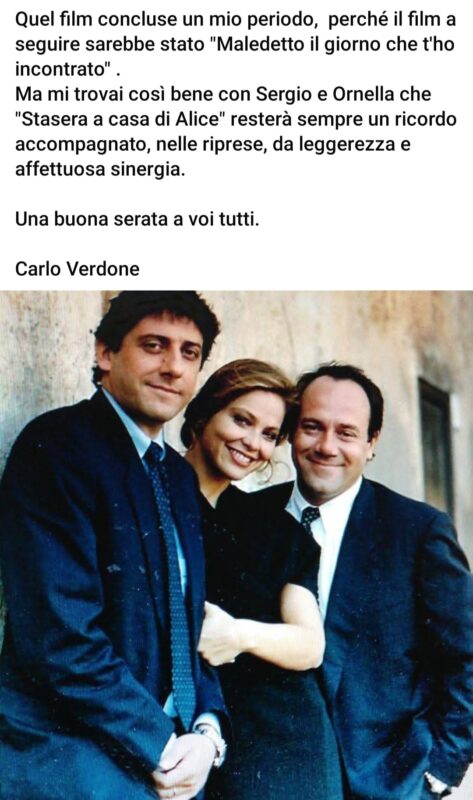
Carlo Verdone chose the island for several scenes in Stasera a casa di Alice (Tonight at Alice’s), a film he directed and starred in alongside Ornella Muti and Sergio Castellitto.
This time, the island is not simply visible in the background: the filming actually took place on Bisentina, with its park used for several sequences.
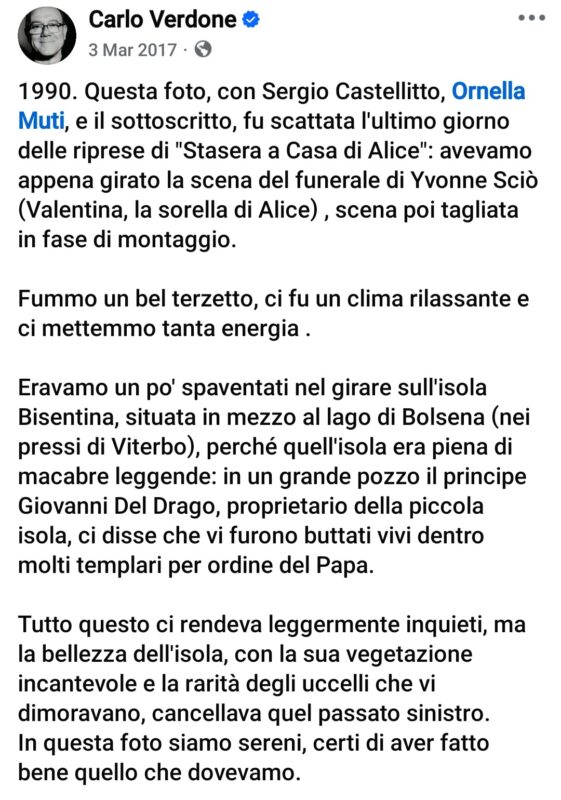
And many years later, it was Verdone himself who recalled what happened during those days.
In 2017, the director posted a photograph on his Facebook profile showing him on Bisentina with Ornella Muti and Sergio Castellitto.
As he explained, it had been taken on the final day of filming.
Shortly beforehand, they had shot the funeral of Valentina, Alice’s sister, played by Yvonne Sciò. The scene, however, would never appear in the finished film: it was removed during editing.
The photograph therefore also preserves the memory of something audiences never got to see.
Photo from the actor’s Facebook profile

“We were a little scared”
In his post, Verdone shares another behind-the-scenes memory.
During filming, he recalls, they were “a little scared” to be on Bisentina Island.
Prince Giovanni Del Drago, then owner of the island, had told the actors some of the darker stories and legends associated with the place, including one according to which a number of Templars had been thrown into a deep well.
A legend that was enough to create a certain atmosphere on set. The uneasiness, however, did not last long.
In his recollection, Verdone quickly moves from those darker stories to the beauty of the vegetation, the birds and the natural surroundings of Bisentina.
And perhaps this is the most interesting detail of all: almost thirty years later, beyond the film itself, what remained was a vivid memory of the island.
Bisentina Island in Alice Rohrwacher’s Cinema
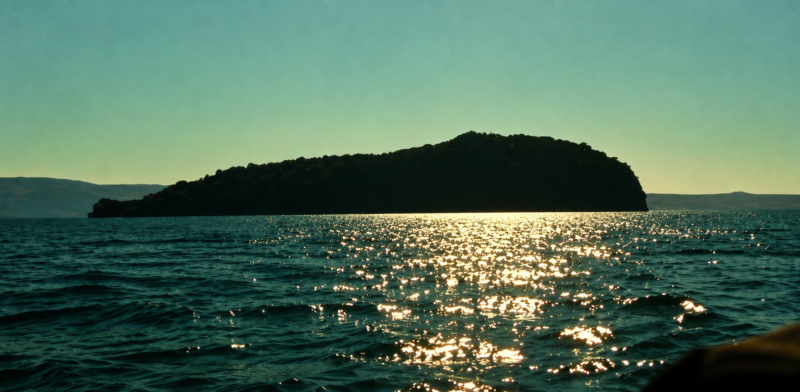
In 2014, Lake Bolsena and Bisentina Island returned to the big screen in The Wonders by Alice Rohrwacher.
In one of the film’s sequences, the lake and the silhouette of Bisentina Island become part of the cinematic landscape, contributing to the rural, suspended atmosphere that defines the story. Much of the film was shot in the Tuscia area, and that same year it won the Grand Prix at the Cannes Film Festival.
Sixty years after Violenza sul lago, cinema was still looking towards the same waters, but through completely different eyes.
When Martana Island Became Finland
And what about Martana?
The smaller of the two islands has had a more discreet cinematic life, but it preserves one particularly curious story.
In 2006, in the thriller H2Odio directed by Alex Infascelli, a boat heads towards an island that, according to the story, is supposed to be in Finland. That island is actually Martana, in Lake Bolsena. The curious detail is that, in the film, the image was simply reversed compared with the real view.
For a few moments, then, cinema transports the small island thousands of kilometres further north.
Not bad for an island that, of course, has never moved from Lake Bolsena.
Two Islands Made for the Big Screen
From 1950s cinema to Italian comedy and contemporary thrillers, Bisentina and Martana have had small but surprising lives on the big screen. And this is only part of the story.
Because Bolsena, its shores, palaces and streets have also been chosen many times as film locations.
But to tell those stories, we will have to leave the islands behind and return to the mainland.
And that will be another story!