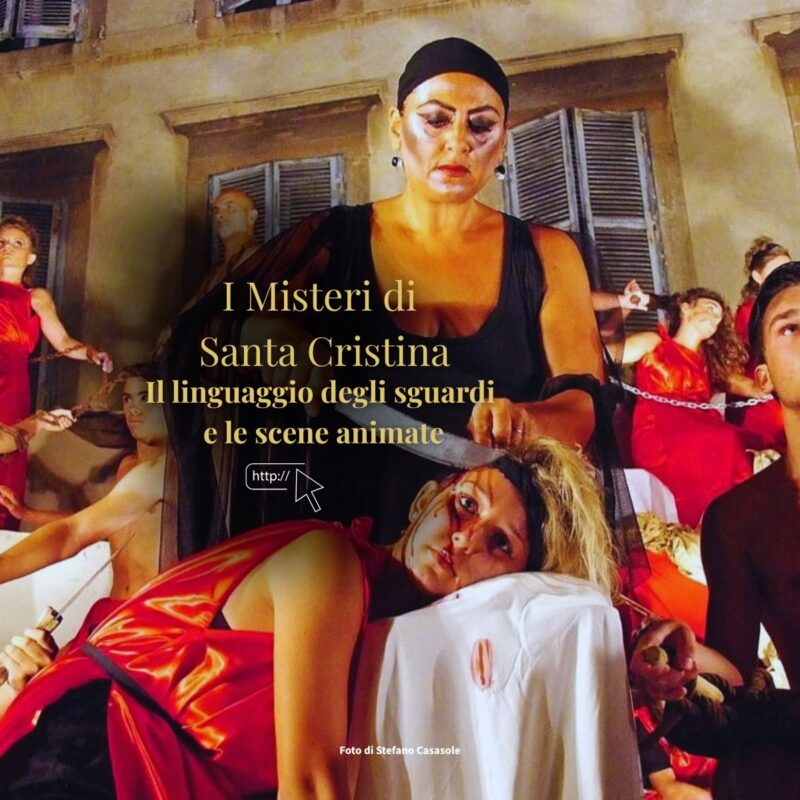
When people think of the Mysteries of Saint Christina, they immediately picture the extraordinary living tableaux that have transformed the historic centre of Bolsena into a powerful story of faith, history, and devotion for generations.
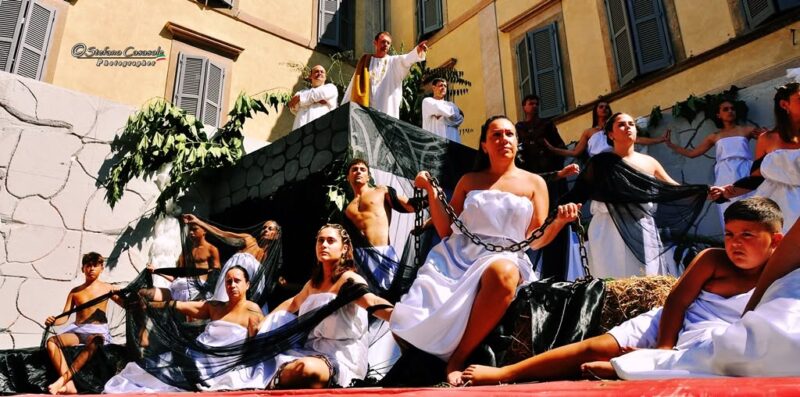
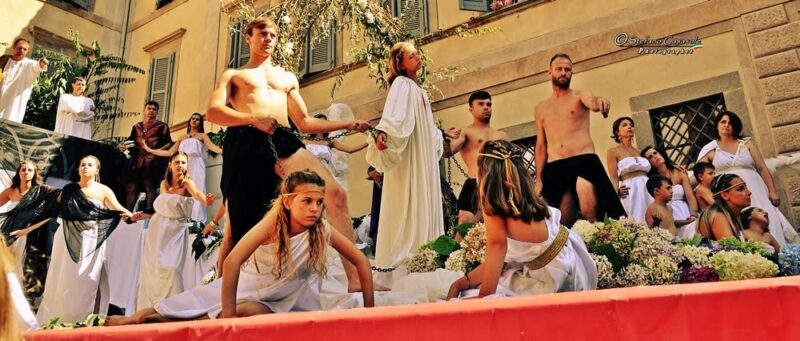
What makes these performances so distinctive is their remarkable stillness.
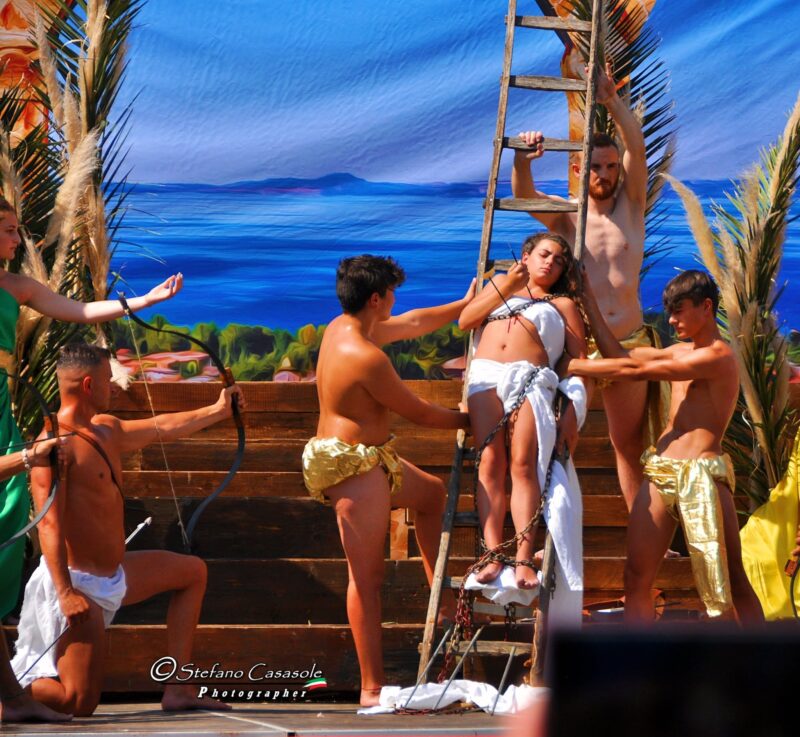
The performers remain almost completely motionless, as though they had stepped out of a painting. Yet, within this apparent immobility, they succeed in conveying profound emotions.
The story is not told through dialogue.
It is not expressed through elaborate theatrical movements.
Instead, it comes to life through body language, facial expressions, eye contact, posture, and the performers’ extraordinary ability to maintain emotional intensity without speaking.
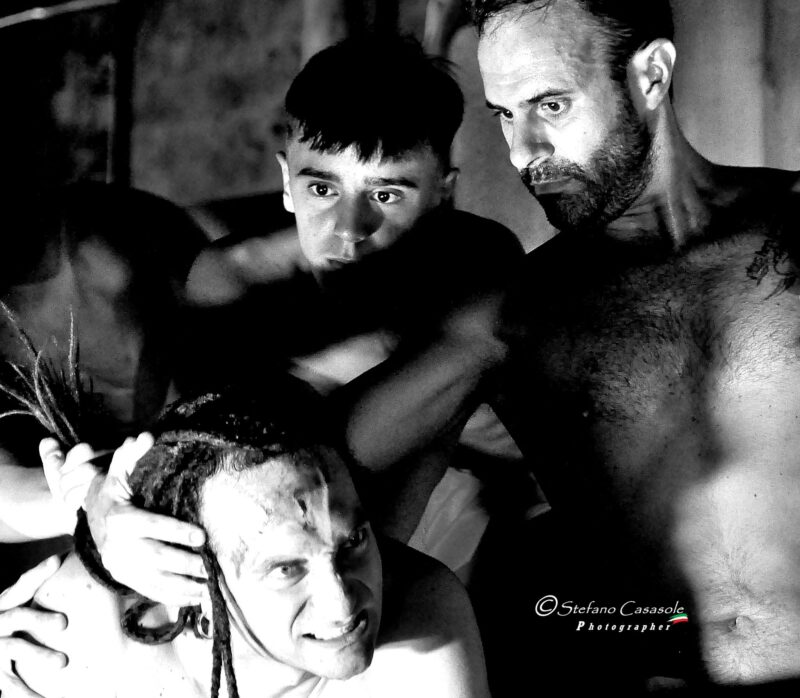
Every participant communicates exclusively through presence and expression.
It is a far more demanding performance than it may appear.
What makes this tradition even more extraordinary is that the performers do not rehearse like actors. There is no full dress rehearsal on stage. In most cases, the scenes are checked only shortly before the curtains open. It is the experience handed down through generations, together with the community’s deep devotion to Saint Christina, that allows every gesture, every glance and every pose to convey such remarkable emotion.
For this very reason, the Moving Mysteries are considered a rare exception.
While preserving the contemplative nature of the traditional living tableaux, a few scenes introduce subtle movements and simple stage effects that make the narrative even more compelling.
The Evening Moving Mysteries
During the evening procession on 23 July, two scenes are traditionally regarded as the Moving Mysteries.
The Mystery of the Lake
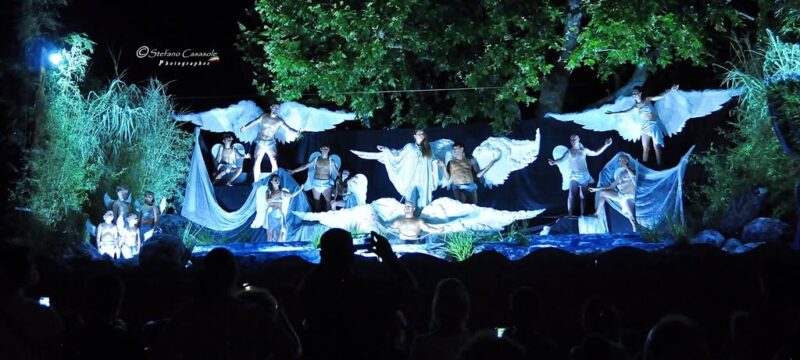
The Mystery of the Lake, also known as the Mystery of the Lake and the Waves, is one of the most distinctive scenes of the evening procession.
Unlike the other Moving Mysteries, it is not the performers who move, but the lake itself. The waves are animated through simple mechanical devices and stage effects, creating a gentle illusion of movement while the characters remain perfectly still.
The scene recalls one of the most significant episodes of Saint Christina’s martyrdom. According to tradition, the young saint was thrown into Lake Bolsena with a heavy stone tied around her neck. Through divine intervention, however, she did not sink. Instead, the stone miraculously became her support, allowing her to reach the shore safely.
This miracle is closely linked to the famous Footprints of Saint Christina, still preserved on the sacred stone inside the Basilica of Saint Christina, one of Bolsena’s most important pilgrimage sites.
The close connection between the lake, the Basilica and the story of the martyrdom makes this Mystery one of the most symbolic scenes of the entire celebration.
The Mystery of the Devils
Certo. Ecco il paragrafo rivisto (senza la frase “Nonostante…”) e subito sotto la traduzione in inglese.
Il Mistero dei Diavoli
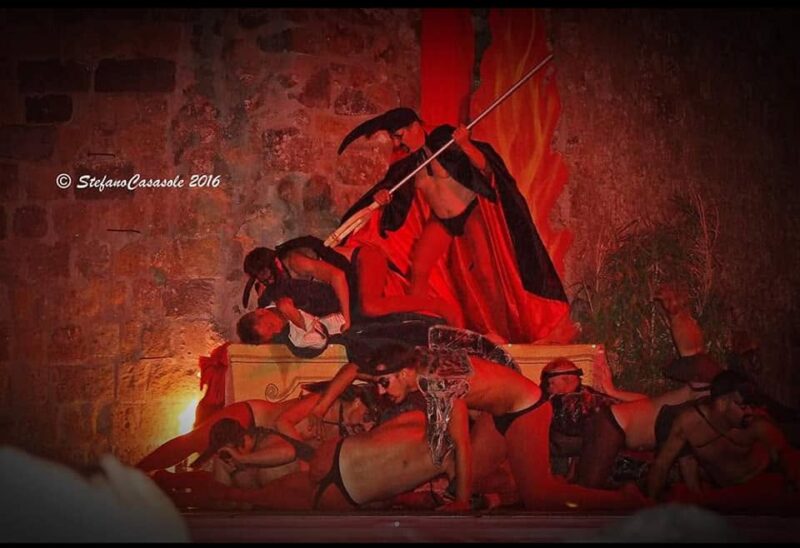
Tra tutti i Misteri di Santa Cristina, quello dei Diavoli è senza dubbio il più dinamico e spettacolare. Rappresenta la più evidente eccezione alla tradizionale immobilità dei quadri viventi, trasformando la scena in una rappresentazione di grande impatto visivo.
Ambientato nel suggestivo scenario di Piazza Monaldeschi, ai piedi del Castello Monaldeschi, il Mistero raffigura la dannazione del padre di Santa Cristina, Urbano, che giace immobile sul proprio letto mentre i demoni irrompono sulla scena per trascinarlo all’inferno.
A differenza degli altri Misteri, qui il movimento è protagonista. I diavoli animano la rappresentazione con corse, salti, gesti energici e movimenti acrobatici, creando un forte contrasto con la staticità che caratterizza il resto della processione. È proprio questa energia scenica a rendere il quadro uno dei momenti più attesi e coinvolgenti della serata.
La scena rappresenta la sconfitta del persecutore della Santa e richiama il tema della giustizia divina, contrapponendo il male incarnato dai demoni alla fede incrollabile di Santa Cristina.
Per la sua forza visiva, il coinvolgimento degli interpreti e l’intensità della rappresentazione, il Mistero dei Diavoli è considerato da molti uno dei quadri più spettacolari e riconoscibili dell’intera festa, capace ogni anno di catturare lo sguardo e l’emozione di migliaia di spettatori.
The Mystery of the Devils
Among all the Mysteries of Saint Christina, the Mystery of the Devils is undoubtedly the most dynamic and spectacular. It is the clearest exception to the traditional stillness of the living tableaux, transforming the scene into one of remarkable visual impact.
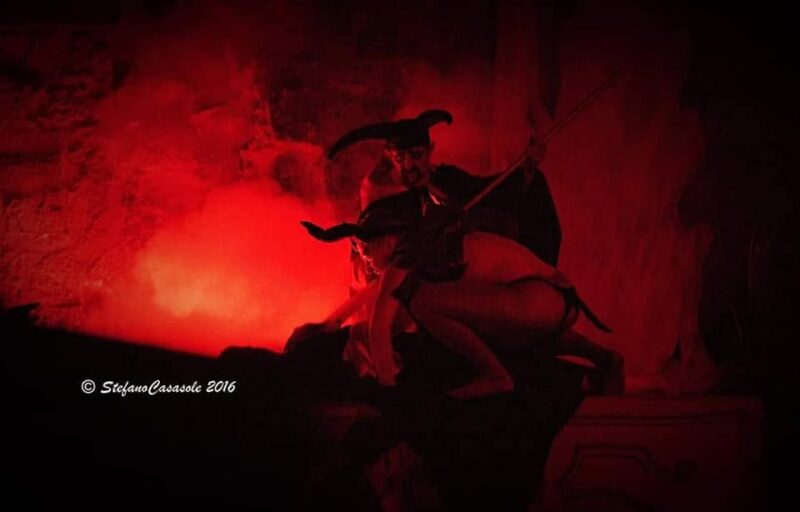
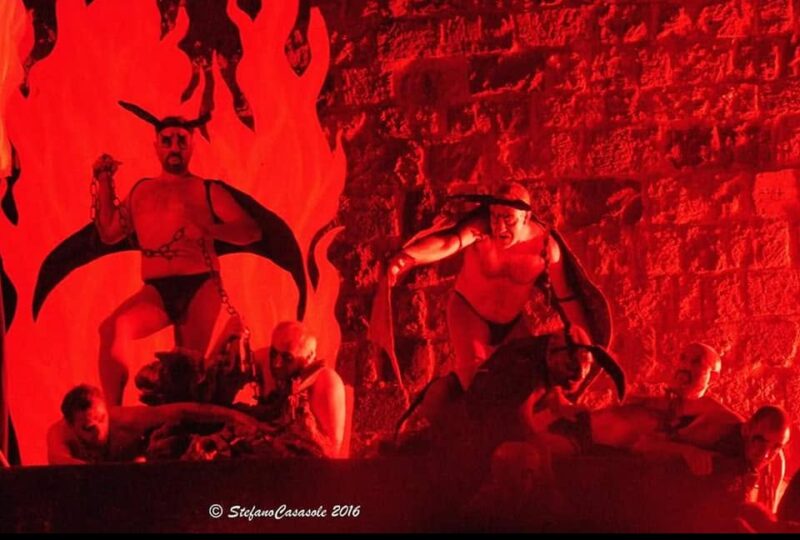
Set in the evocative surroundings of Piazza Monaldeschi, beneath the imposing Monaldeschi Castle, the Mystery portrays the damnation of Saint Christina’s father, Urbanus, who lies motionless on his bed while the devils burst onto the scene to drag him into Hell.
Unlike the other Mysteries, movement takes centre stage here. The devils animate the performance with running, jumping, energetic gestures and acrobatic movements, creating a striking contrast with the stillness that characterises the rest of the procession. It is precisely this dramatic energy that makes the tableau one of the most eagerly awaited and engaging moments of the evening.
The scene represents the defeat of Saint Christina’s persecutor and recalls the theme of divine justice, contrasting the evil embodied by the devils with the unwavering faith of Saint Christina.
Thanks to its visual impact, the commitment of its performers and the intensity of its staging, the Mystery of the Devils is widely regarded as one of the most spectacular and recognisable tableaux of the entire celebration, captivating thousands of spectators year after year.
The Morning Moving Mysteries
During the morning procession on 24 July, two further scenes introduce subtle movement.
The Mystery of the Serpents
Among all the Mysteries, the Mystery of the Serpents is probably the most deeply rooted in local tradition and one of the audience’s favourites.
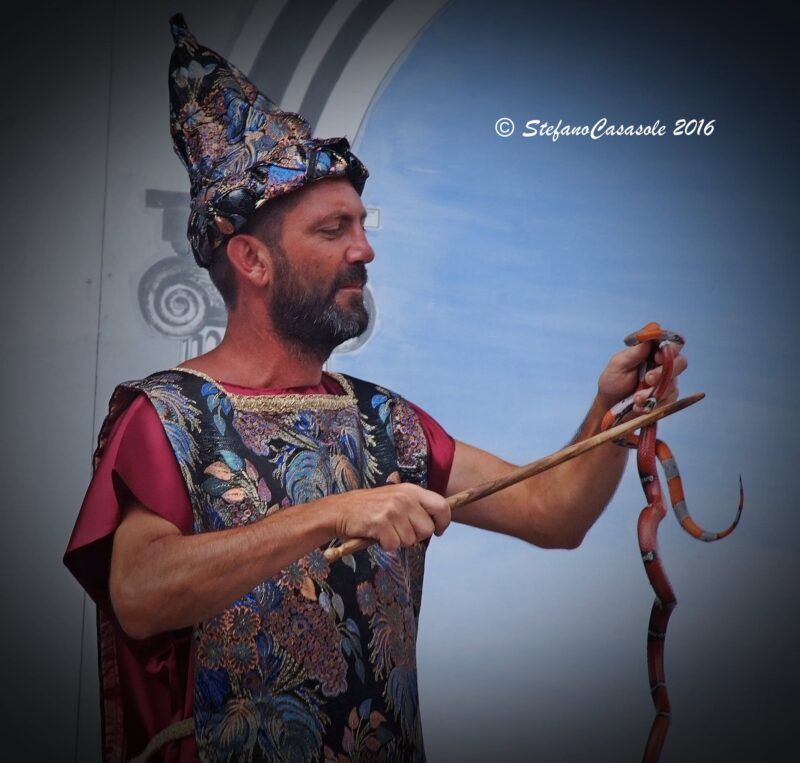
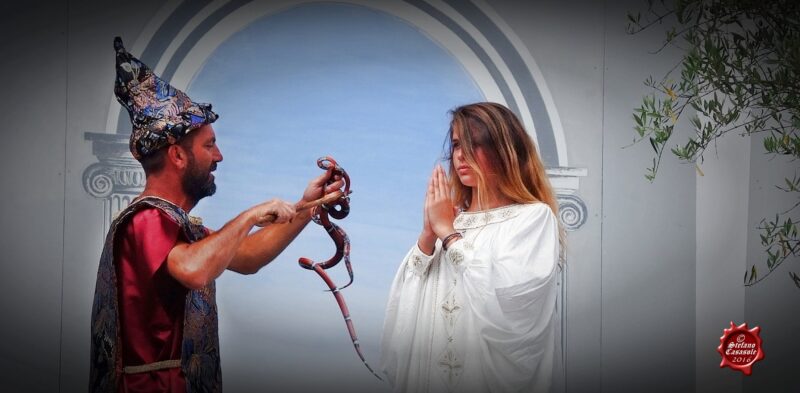
The scene portrays Saint Christina, tied to the stake of her martyrdom, while the Serparo—the traditional name given to her persecutor—attempts to kill her using serpents. According to tradition, however, the animals do not harm the saint. Instead, evil turns against the persecutor himself.
The climax of the performance is the mimed “Tremore” (“Trembling”), during which the Serparo collapses to the ground, symbolising the deadly effect of the serpent’s venom.
The scene concludes with another deeply moving moment as the chains holding Saint Christina fall dramatically onto the stage, while the young martyr kneels in prayer.
Beyond depicting the martyrdom itself, this Mystery carries profound symbolic meaning. The serpents represent untamed nature, overcome not by force but through holiness and faith, recalling the Christian triumph of good over
 evil.
evil.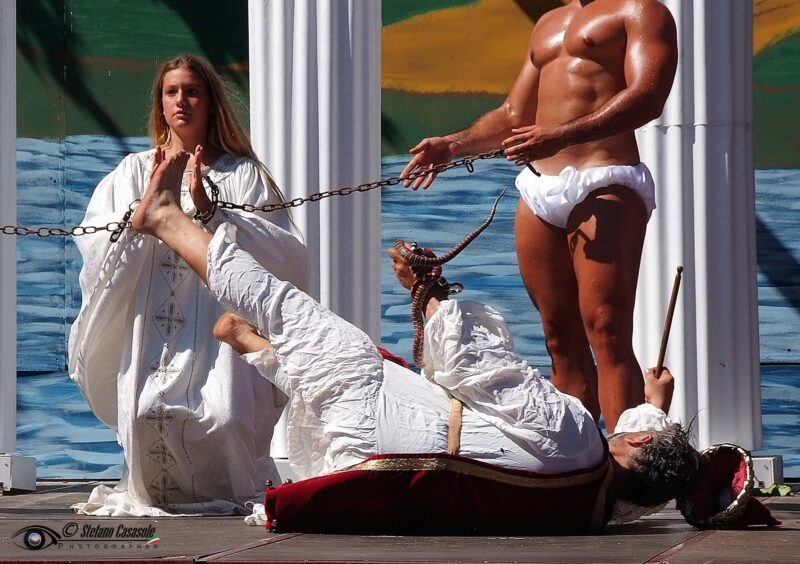
The Mystery of the Cutting of the Tongue
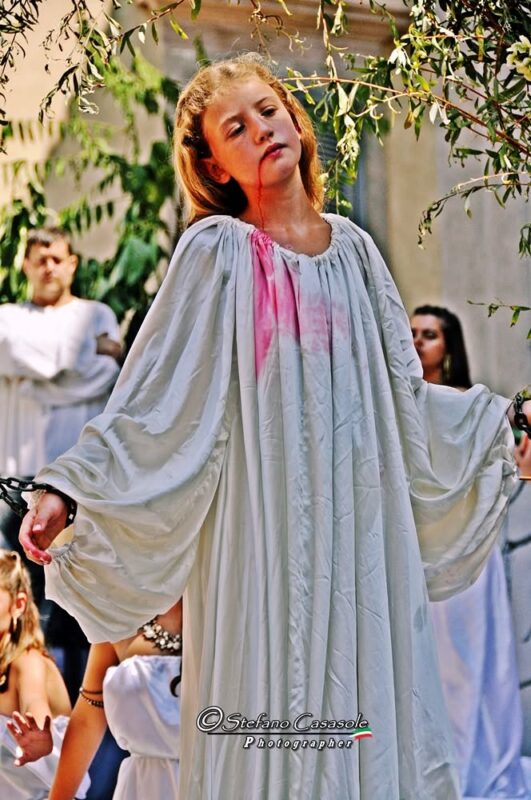
In the Mystery of the Cutting of the Tongue, performed in Piazza San Rocco, Saint Christina remains perfectly still, faithful to the tradition of the living tableaux.
The only movement belongs to the executioner, who performs the symbolic gesture of cutting out the saint’s tongue. This is followed by the appearance of blood flowing from her mouth, a simple yet highly effective stage effect that greatly intensifies the emotional impact of the scene.
Here too, movement is reduced to its absolute minimum. A few carefully measured gestures are enough to portray one of the most dramatic episodes of Saint Christina’s martyrdom while preserving the contemplative and deeply religious nature of the Mysteries.
Like the other Moving Mysteries, this brief action is not intended to impress through spectacle, but to make the story of the young patron saint of Bolsena even more immediate and meaningful.
The Meaning of Movement
Within the Mysteries of Saint Christina, movement is never used simply to entertain.
Its purpose is to tell the story.
Every gesture is reduced to its essentials, ensuring that the religious message always remains at the centre of the performance.
This delicate balance between silence and movement, stillness and action, makes the Mysteries of Saint Christina one of Italy’s most distinctive historical and religious traditions.
Experience the Mysteries of Saint Christina
Every year, on 23 and 24 July, the historic centre of Bolsena becomes the stage for one of Italy’s most fascinating religious traditions.
Between the traditional living tableaux, the rare Moving Mysteries, and the solemn procession dedicated to the patron saint, the town renews a centuries-old ritual that continues to preserve its identity while captivating thousands of visitors.
Book Your Stay
Be inspired by a tradition that has moved generations of local people and visitors alike. Plan your stay in Bolsena and experience the Mysteries of Saint Christina, one of the most authentic and unforgettable events of the summer on Lake Bolsena.