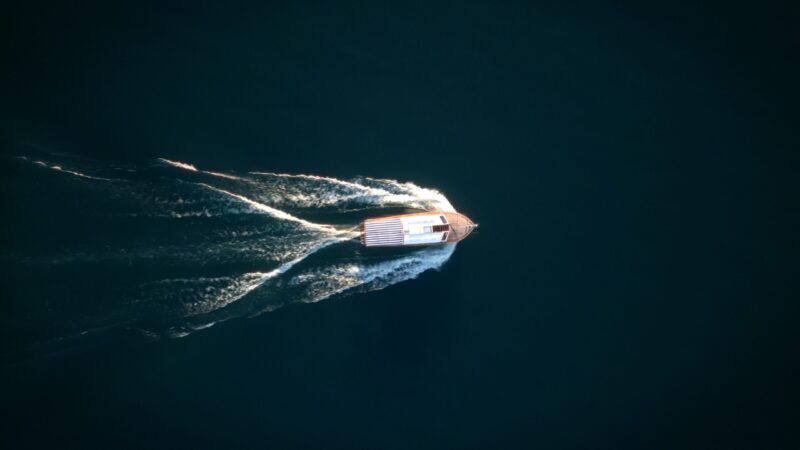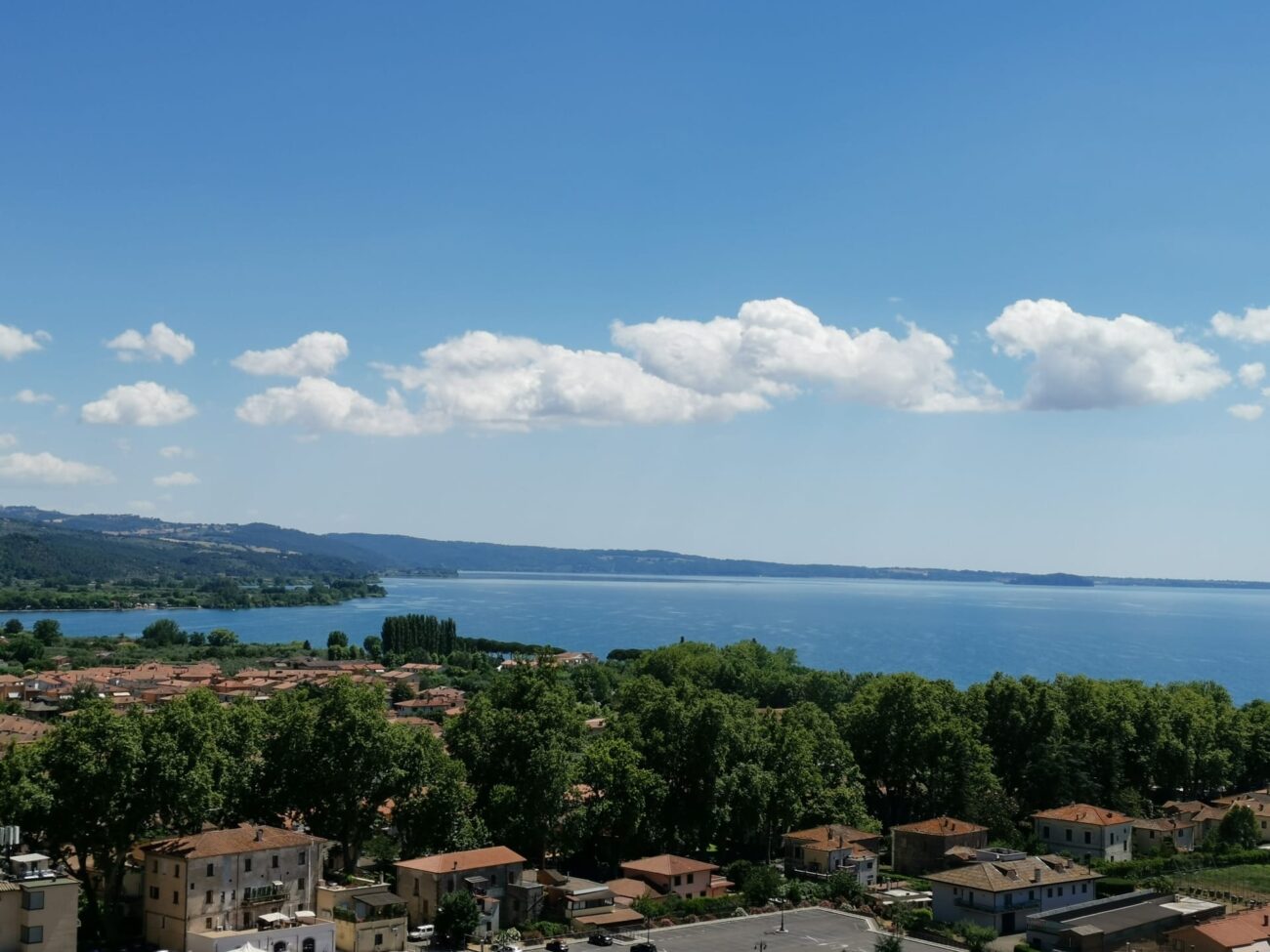
Today, Lake Bolsena is one of the most fascinating destinations in central Italy for those seeking nature, history, relaxation, and outdoor experiences. Boat excursions to Bisentina and Martana Islands are among the most popular activities for visitors, yet few know that tourist navigation on Lake Bolsena dates back to the late nineteenth century.
Exploring this history means discovering how the lake gradually evolved from a place primarily dedicated to fishing into a tourist destination capable of attracting travelers and visitors from far and wide.
The Beginning of Navigation on Lake Bolsena
Unlike the great lakes of northern Italy, where navigation had been essential for transportation and trade for centuries, Lake Bolsena did not develop a strong tradition of water transport.
Its almost circular shape and the presence of roads easily accessible along its shores made water connections between the lakeside towns less necessary.
For a long time, the lake remained primarily the domain of fishermen.
The earliest documented evidence of organized navigation on Lake Bolsena dates back to the late nineteenth century. Contemporary accounts describe the enthusiasm generated by the introduction of boats connecting the lake’s shores and islands, opening new opportunities for transportation, commerce, and tourism.
The Gazzetta di Viterbo of July 19, 1884, described navigation on the lake as a great opportunity for the development of the area, envisioning a future in which the waters of Lake Bolsena would become a privileged route for travelers and holidaymakers.
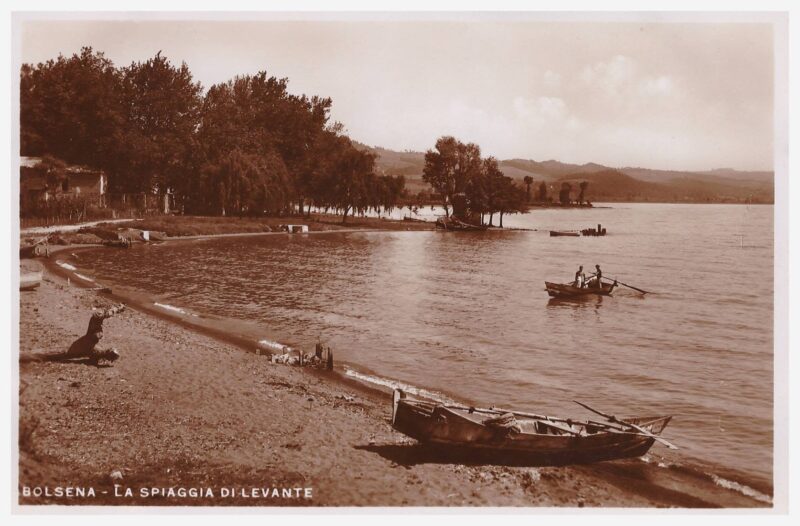
(Bolsena, Levante Beach. Historic postcard. The small building visible in the center, among the trees, corresponds to today’s Bar del Porto.
Photo and identification by Pierpaolo Cincinelli, “Sei di Bolsena se” Facebook group. Di Pierpaolo Cincinelli da “Sei di Bolsena se” )
The Hopes of a Territory
The Gazzetta di Viterbo newspaper, in its edition of July 19, 1884, presented the arrival of steam navigation on Lake Bolsena as an opportunity to create new connections between the lakeside communities and open unprecedented prospects for trade and tourism.
“Distances and difficulties will disappear if these surrounding routes are replaced by the direct and rapid route of water through steam boats.”
The idea was ambitious: to connect Bolsena, Marta, Capodimonte, and the islands through regular navigation services, creating new opportunities for the entire area.
The Dream of Lakeside Tourism
By the end of the nineteenth century, Lake Bolsena was already being imagined as a tourist destination.
Historical accounts describe the excitement generated by the possibility of reaching the islands and lakeside villages aboard steam boats. In particular, Bisentina Island was already considered one of the most enchanting and picturesque places on the lake.
Navigation was no longer seen solely as a means of transportation but as a genuine travel experience.
Observing the lake from the water, slowly crossing its shores, and approaching its volcanic islands offered visitors a completely new perspective on the territory.
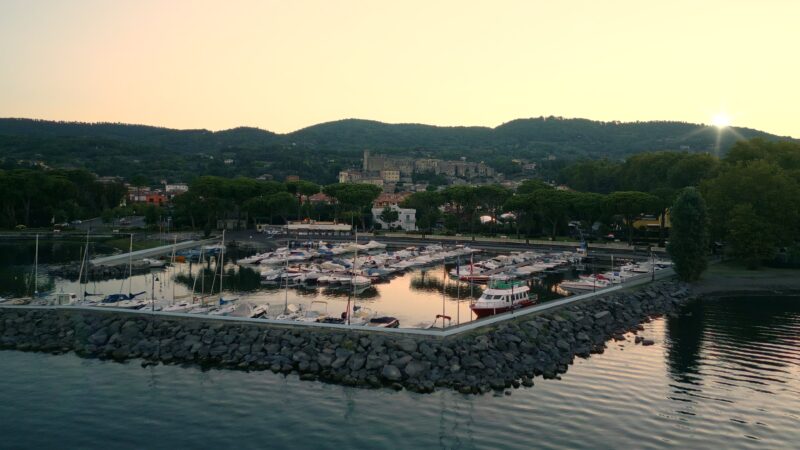
Bolsena Harbor and the Limnological Research Center
At the beginning of the twentieth century, the relationship between Bolsena and the lake continued to evolve.
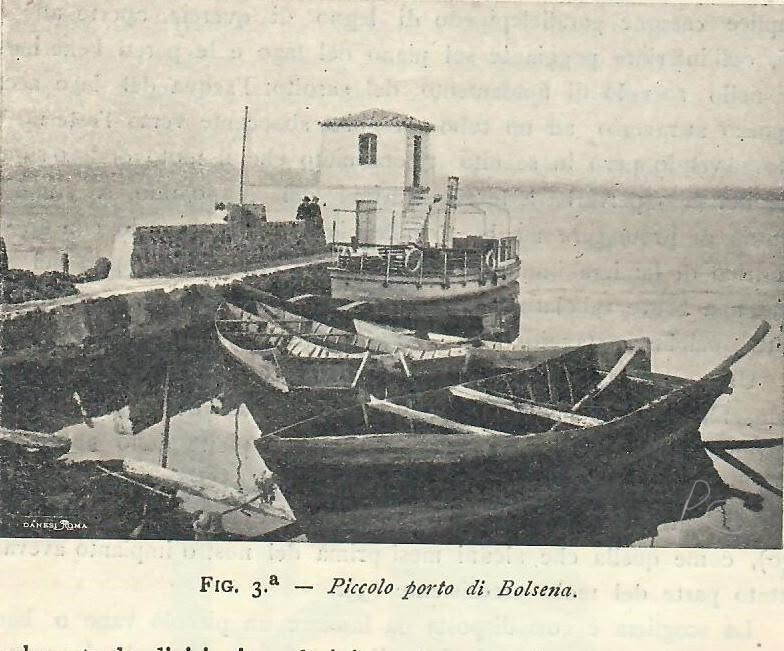
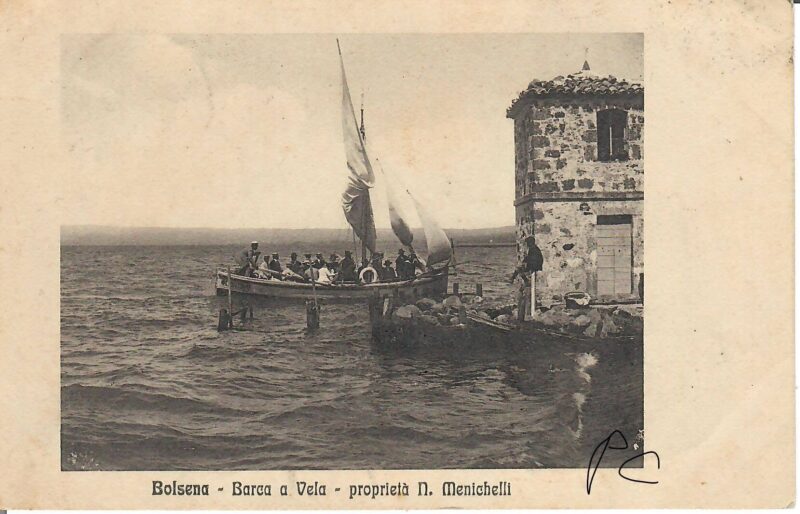
In 1904, the Limnological Research Center was established to conduct some of the first scientific studies on Lake Bolsena. At that time, the harbor area looked very different from what we see today, being frequented almost exclusively by fishermen and a small number of upper-class bathers.
(La stazione limnologica oggi Bar del Porto. Edizioni Alessandrini. Spedita 1910. Molto rara. Di Pierpaolo Cincinelli da “Sei di Bolsena se” )
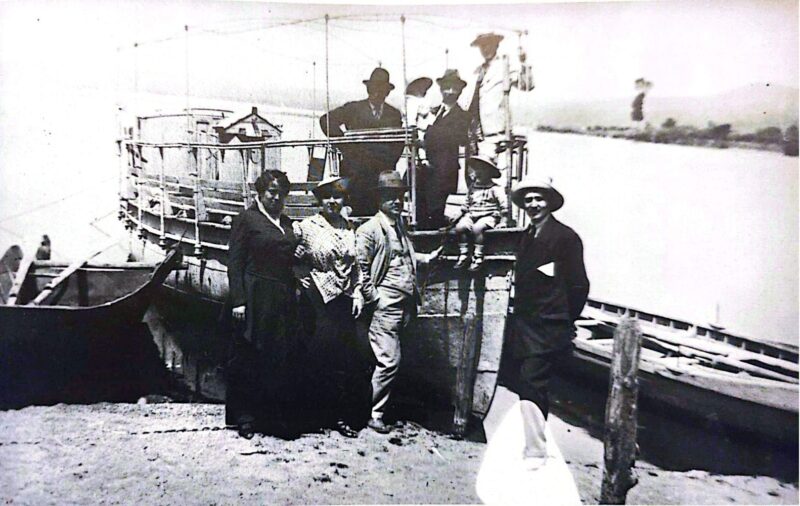
During those same years, navigation on the lake continued to modernize. A historical photograph documents the Santa Cristina boat, which from 1917 onward was no longer steam-powered but equipped with an internal combustion engine. This development demonstrates how Lake Bolsena was gradually entering the modern age while maintaining the navigational tradition.
Photo caption: The Santa Cristina boat on the shores of Lake Bolsena. From 1917 onward, the vessel was equipped with an internal combustion engine, marking a new chapter in the history of navigation on the lake.
In 1937, a fishing harbor was built next to the research center and was later expanded in 1980.
From that moment on, the harbor underwent a gradual transformation and eventually became one of the most iconic places in Bolsena’s tourism landscape.
The former Limnological Research Center also changed its role over time, contributing to the development and enhancement of the lakeside promenade.
Tourist Navigation on Lake Bolsena Today
A significant milestone in the modern history of tourist navigation on Lake Bolsena came in 1983, when Duilio Ponzianelli obtained authorization to operate regular transport services between the lakeside towns using the motor catamaran Galileo.
Over the last few decades, tourist navigation on Lake Bolsena has grown alongside the increasing appreciation and promotion of the area.
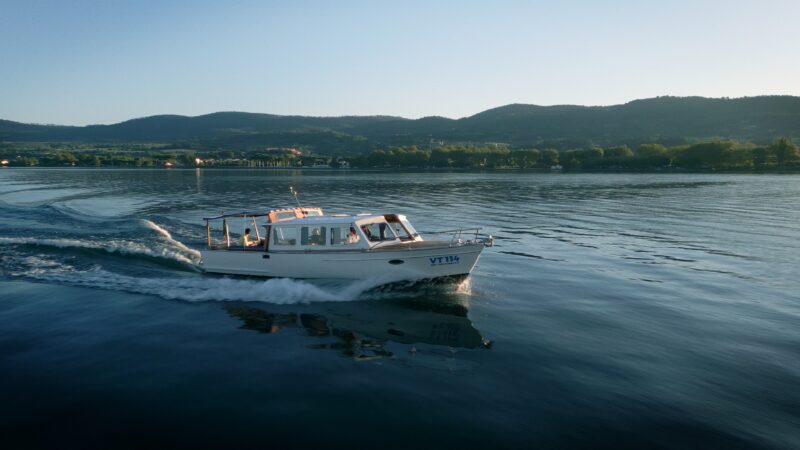
Today, the harbors of Bolsena, Marta, and Capodimonte host tourist boats and excursion vessels. These trips allow visitors to admire the landscape from a privileged perspective, discover hidden corners inaccessible from the shore, and approach the two islands that emerge from the waters of Europe’s largest volcanic lake.
Excursions to Bisentina Island remain among the most sought-after experiences for visitors exploring Bolsena and its surroundings.
A Vision Ahead of Its Time
As early as 1884, some people imagined that the lake could become a destination dedicated to travel, leisure, and the discovery of the surrounding territory.
“May its islands, its smiling and once deserted shores, become lively places of holidaymaking and pleasant stays.”
Today those words describe with remarkable accuracy the tourist vocation that Lake Bolsena has successfully developed over time.
Navigation on Lake Bolsena still preserves something of the spirit of those first boats that crossed its waters: the pleasure of slow travel, the charm of volcanic islands, and the opportunity to admire the lake from a unique perspective, just as travelers did more than a century ago.
Experience Lake Bolsena from the Water
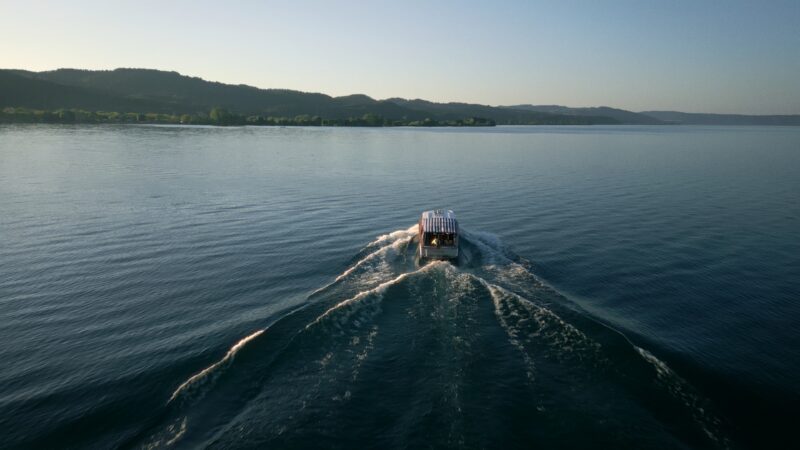
Today visitors can still experience that same sense of wonder by exploring the lake from the water.
Modern boat excursions allow travelers to admire Bisentina and Martana Islands up close, discover hidden stretches of shoreline, and learn about the history of one of the most fascinating landscapes in the Tuscia region.
For information, reservations, and tours:
Navigazione Alto Lazio
Via G. Savastano 56D – Bolsena (VT)
Telefono e WhatsApp: +39 338 564 1467
Email: info@navigazionealtolazio.it
Sito web: www.navigazionealtolazio.it
A simple and memorable way to see the lake through the eyes of the first travelers who, more than a century ago, boarded the Galileo to explore these waters.
A Journey Through the Sources
The historical information presented in this article has been compiled through publications dedicated to preserving the photographic and documentary heritage of the Lake Bolsena area.
In particular:
- Greetings from the Twentieth Century. Photographs, Postcards and Memories from the Lake Bolsena Area, edited by Marcello Rossi.
- CLIC!… Photographic Images of the Viterbo Area, by Mauro Galeotti.
These works preserve valuable testimonies, photographs, and documents that help retrace the evolution of the relationship between Bolsena, its harbor, and the lake over the last two centuries.